
Your group has scattered across a site. Now what?
Summarize with AI:ChatGPTClaudePerplexityGrokGoogle AI Mode
Every guide has stood at a meeting point counting heads and coming up two short. The instinct is to treat this as a discipline problem -- the group did not listen. It is almost always a communication problem, and it was created several minutes before anyone went missing.
The good news is that the fixes are small, free and mostly verbal.
Why does "twenty minutes" fail?
Because it starts a different stopwatch for every participant. Someone hears it while already walking away, someone else while still asking a question, and a third person hears "twenty" and rounds it up in their head because they want to see one more thing.
A clock time is a shared reference. "We meet at 11:20" is the same instruction for everyone regardless of when they stopped listening.
| Instruction | What goes wrong | Better version |
|---|---|---|
| "Twenty minutes" | Each person starts their own clock | "Back at 11:20" |
| "Meet at the entrance" | Large sites have several | "The tree beside the ticket gate" |
| "Stay together" | Not actionable when there is something to see | "Anywhere inside this courtyard" |
| "I'll come find you" | You cannot, at forty people | "Come back to me here" |
Where do people actually go?
Not far, and not randomly. In our own tours the missing participants were almost always behind something -- a wall, a rise, a stand of trees -- within sixty or seventy metres of the meeting point. They were not lost. They simply could not hear the call and had no reason to think time was up.
That is worth knowing because it changes what you do when someone is late. Walking a loop around the nearest obstruction finds people faster than standing at the meeting point calling.
- Set the clock time before you release the group, while everyone is still in an arc around you.
- Point at the landmark while you name it. A pointed finger survives translation and inattention better than a noun.
- Give a five-minute warning if you have any way to reach them -- this single announcement removes most late returns.
- Count at the meeting point, then walk one loop behind the nearest obstruction before you worry.
- Say what happens next. "We leave for the theatre at 11:25" gives the group a reason to be on time that "be on time" does not.
What changes when you can reach everyone at once?
Free time stops being a gamble. If every participant is still wearing an earphone connected to your broadcast, a five-minute warning reaches the person behind the wall as clearly as the person standing next to you.
In practice this changes how much free time guides are willing to give. When the recall is reliable, twenty minutes at a large site is a feature of the tour rather than a risk to the schedule -- and participants spend it looking at things instead of watching the clock.
Frequently asked questions
How much free time is reasonable at a large site?
Does an announcement reach people who wandered off?
What if someone removed their earphones during free time?
Should I take phone numbers?
Make free time cheap
The verbal habits above cost nothing and work on any tour. If the reason you keep free time short is that you cannot reliably call people back, see how the broadcast works -- announcements reach every participant's own earphones, including the one behind the wall.
Sources
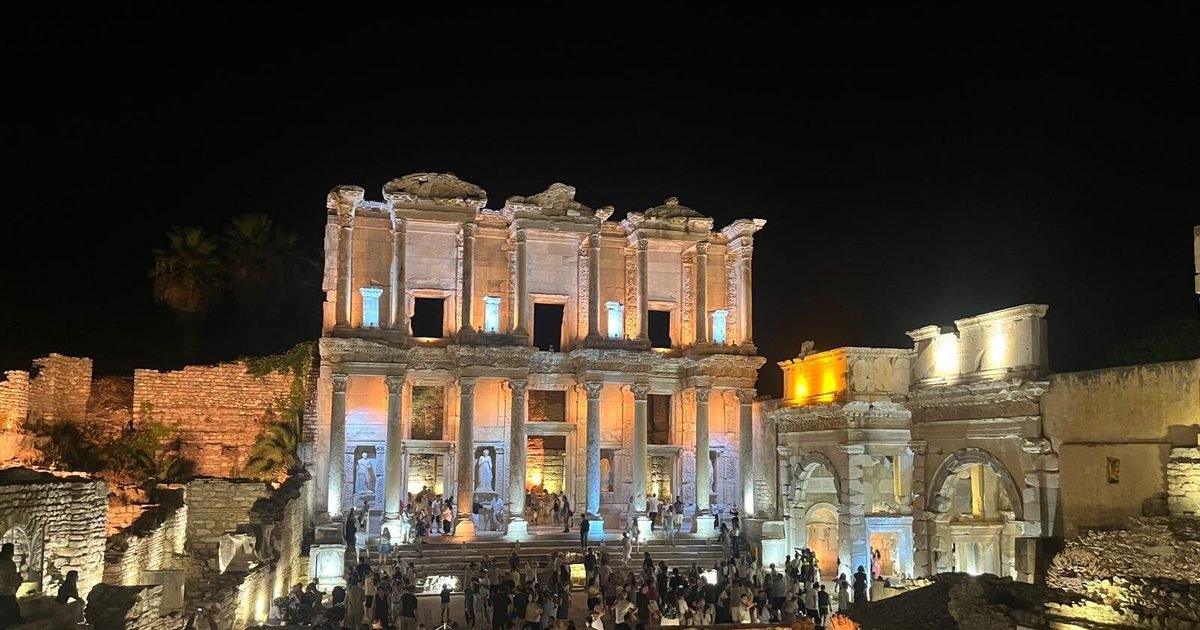
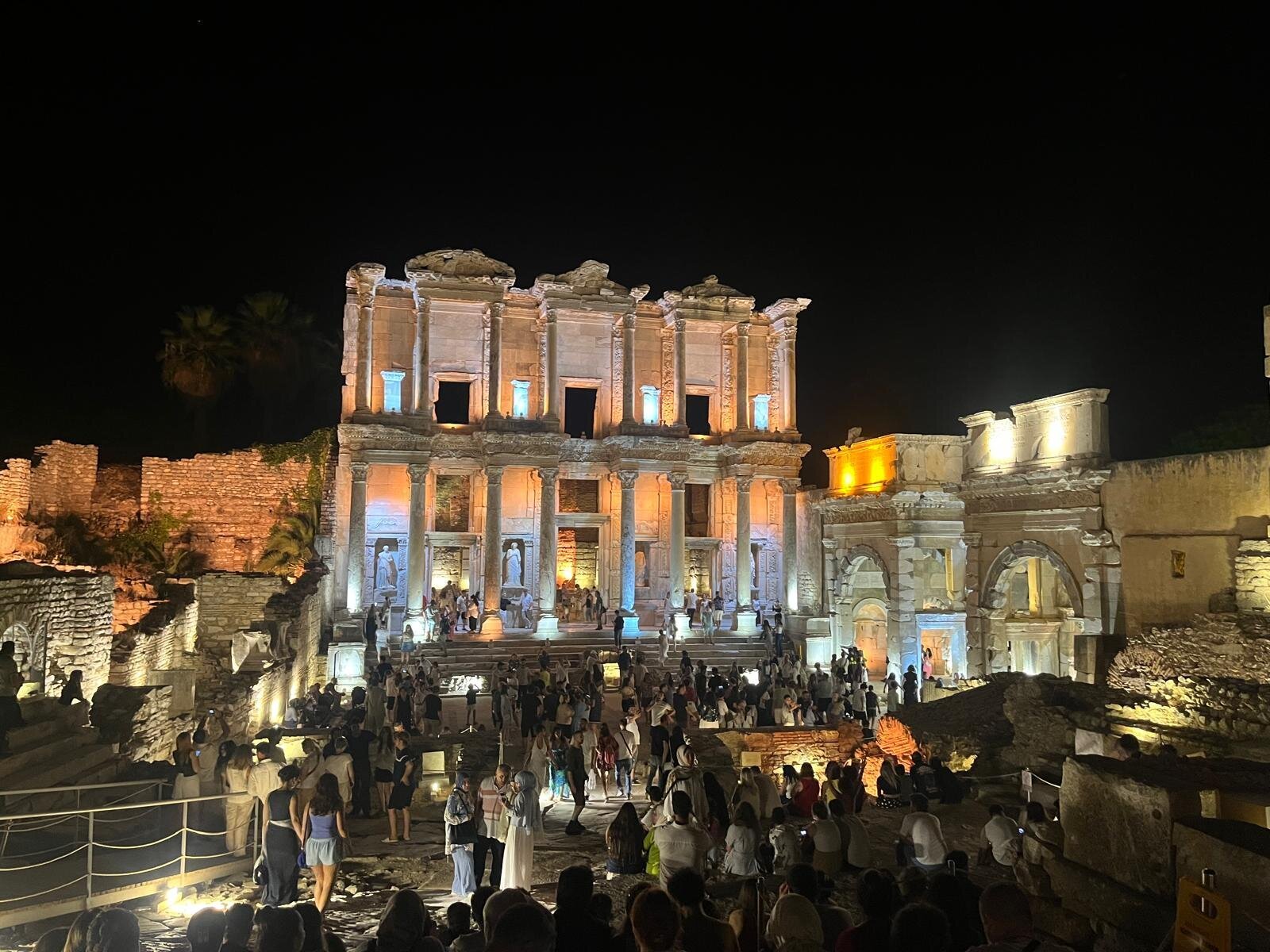
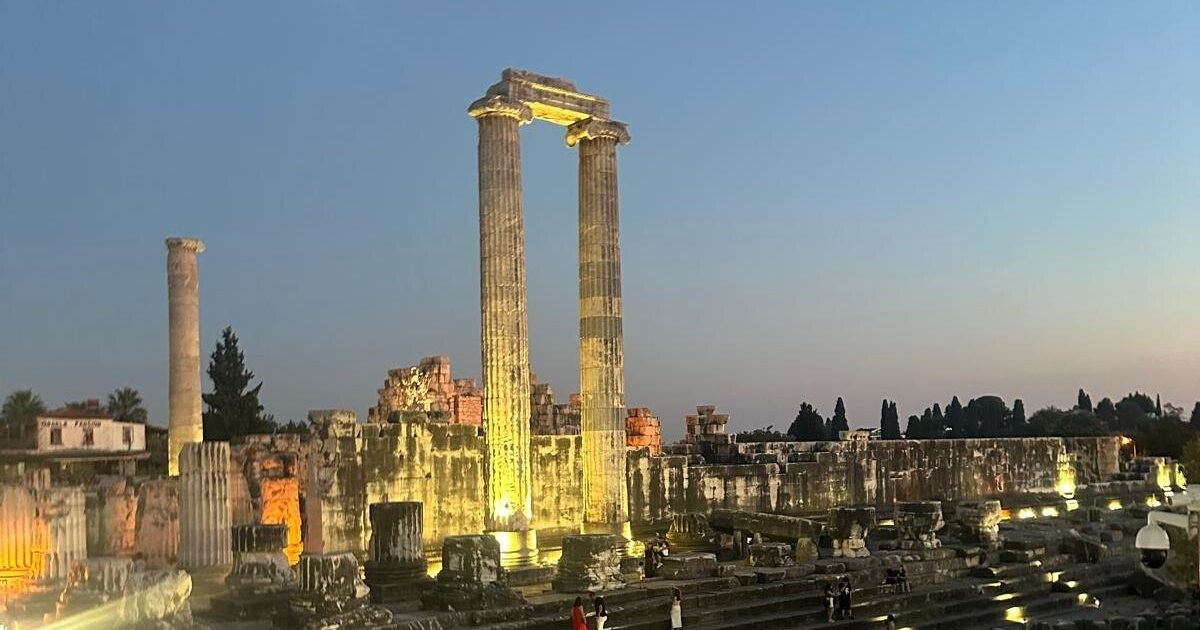
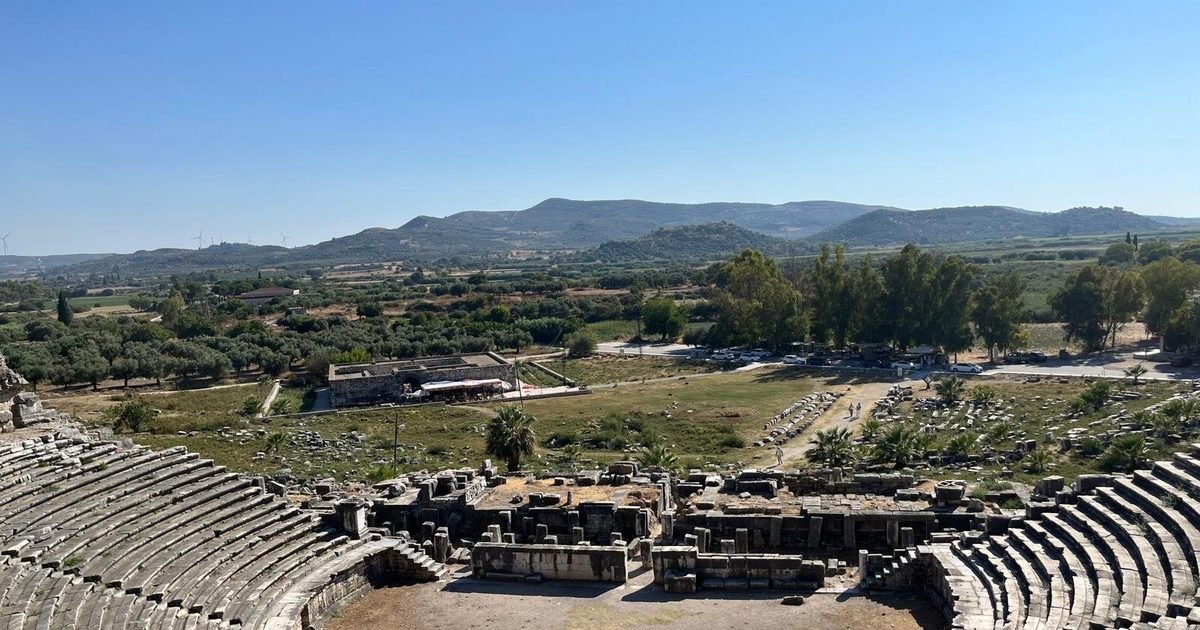
Observations about where participants go during free time come from our own field tests at Ephesus, Miletus, Didyma, Göbeklitepe and Karahantepe. Photograph is our own. Announcement reach depends on the local network, which is described on the how-it-works page.
Related articles
 GuidesHeadsets are mandatory for Florence tour groups of more than eight (2026)
 GuidesHow do you guide a group that does not share a language?
 GuidesDoes a tour audio system work underground? Signal, stone and what to carry
 GuidesHow do you make a guide's voice heard in wind? What actually gets lost
 GuidesCan a guide narrate out loud inside a museum? What the rules actually restrict
 GuidesHow to guide a 40-person group through an archaeological site in 2026