
Quiet guiding in China and Japan: loudspeaker bans from the Forbidden City to Kyoto's temples (2026)
Summarize with AI:ChatGPTClaudePerplexityGrokGoogle AI Mode
Chinese and Japanese sites rarely tell guides to use headsets. What they do, site after site, is ban the megaphone. Beijing's scenic areas have done so since 2008, and in 2026 a Chengdu museum and Kyoto's Kenninji temple tightened their rules again. For a guide, the result is a norm of quiet guiding: group voice devices where they are allowed, a low voice everywhere, and at a few places no listening equipment at all.
What does Beijing require at its scenic areas?
Since 1 June 2008, guides at Beijing's graded scenic areas must use audio guide devices or another non-amplified method instead of handheld megaphones and microphones. The tourism bureau's notice is still listed as in force:
“一、2008年6月1日起,旅行社的导游服务、旅游景区的讲解服务,应当采用语音导览器或其它非扩音的方式。”
In English: from 1 June 2008, agency guiding and scenic-area narration shall use audio guide devices or other non-amplified methods. The notice also suggests agencies equip themselves with wireless, non-amplified group narration devices. Offenders are publicly criticised; there is no fine.
Beijing's Tourism Regulations, in force since 1 August 2017, add three points. Amplification is allowed only in zones and times a site designates, and “噪声排放不得超过50分贝”: noise may not exceed 50 decibels. Sites are encouraged to offer “手机自助导游”, self-guided tours on mobile phones. And at six World Heritage sites, including the Forbidden City and Badaling, narrating to a tour group requires a site-issued narrator certificate, with a CNY 2,000 fine for those who refuse to stop.
Our tour group headset rules page lists these Beijing rules with sources.
How does the Forbidden City enforce its ban?
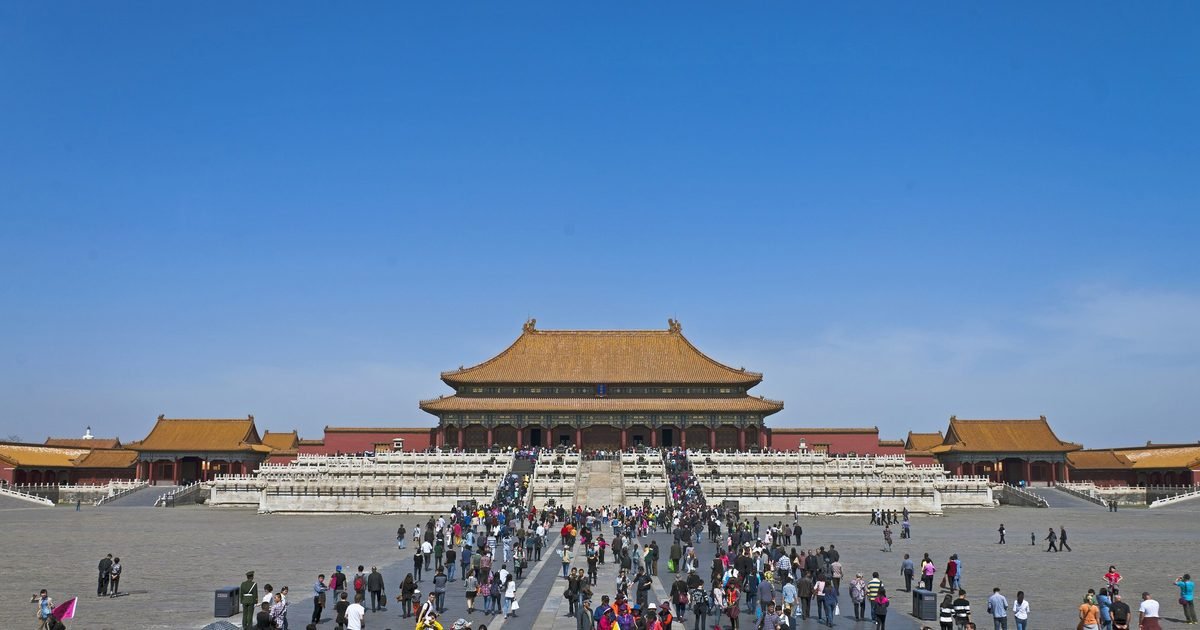
At the gate. Since 1 April 2015, travel agency guides may not use any amplification device inside the Palace Museum, and megaphones are checked in at the Meridian Gate and handed back at the exit. The museum's announcement:
“故宫博物院将于2015年4月1日起采取系列措施,禁止旅行社导游在院内使用各种扩音设备。”
In English: from 1 April 2015 the Palace Museum bans agency guides from using any kind of amplification equipment inside. For groups too large to hear an unamplified guide, the museum offers its own group audio devices at a reduced price, and today's visitor rules also ban playing audio through speakers.
Which other Chinese sites ban amplification?
Most major heritage sites on a typical China itinerary now restrict amplification. These are the texts we checked on 2 October 2026.
| Place | Rule | Since | Sanction |
|---|---|---|---|
| Pingyao Ancient City | No open, loudspeaker-type narration devices | 3 Dec 2018 | CNY 50-200 for the guide |
| Gulangyu, Xiamen | No loudspeakers in tourism or business activities | 8 Jul 2019 | CNY 500-3,000 |
| Fuzimiao–Qinhuai area, Nanjing | No loudspeakers in business activities | 1 Jan 2021 | Not checked |
| Shaanxi History Museum, Xi'an | Group voice device required; no amplifiers | 9 Jun 2022 | Narration stopped |
| Chengdu Museum | No amplifiers; daily quota for outside narrators | 25 Jul 2025 | Eligibility cancelled |
| Wuhou Shrine, Chengdu | No audio played through speakers | Current rules | Not stated |
| Du Fu Thatched Cottage, Chengdu | No waist amplifiers; advance filing | 5 Mar 2026 | Narration stopped |
| Nanjing Museum | No narration transmitters or headset microphones | Current rules | Items not admitted |
Pingyao's regulation is the closest to a device rule: “导游服务不得使用开放式讲解设备”, guide services may not use open narration equipment. A closed system that reaches only the group's ears is not open, but the text does not define the term.
The Shaanxi History Museum goes furthest. Its 2022 measures, still posted, say: “讲解人讲解时需使用团队语音助手设备,不可使用扩音设备和红外线激光笔。” Narrators must use a group voice-assistant device and may not use amplifiers or laser pointers. Outside narration needs an application seven working days ahead. Chengdu's Du Fu Thatched Cottage has required filing a day ahead and a temporary narrator card since 5 March 2026, and bans “小蜜蜂”, the waist amplifiers known as little bees.

What do Kyoto's temples and palaces ban?
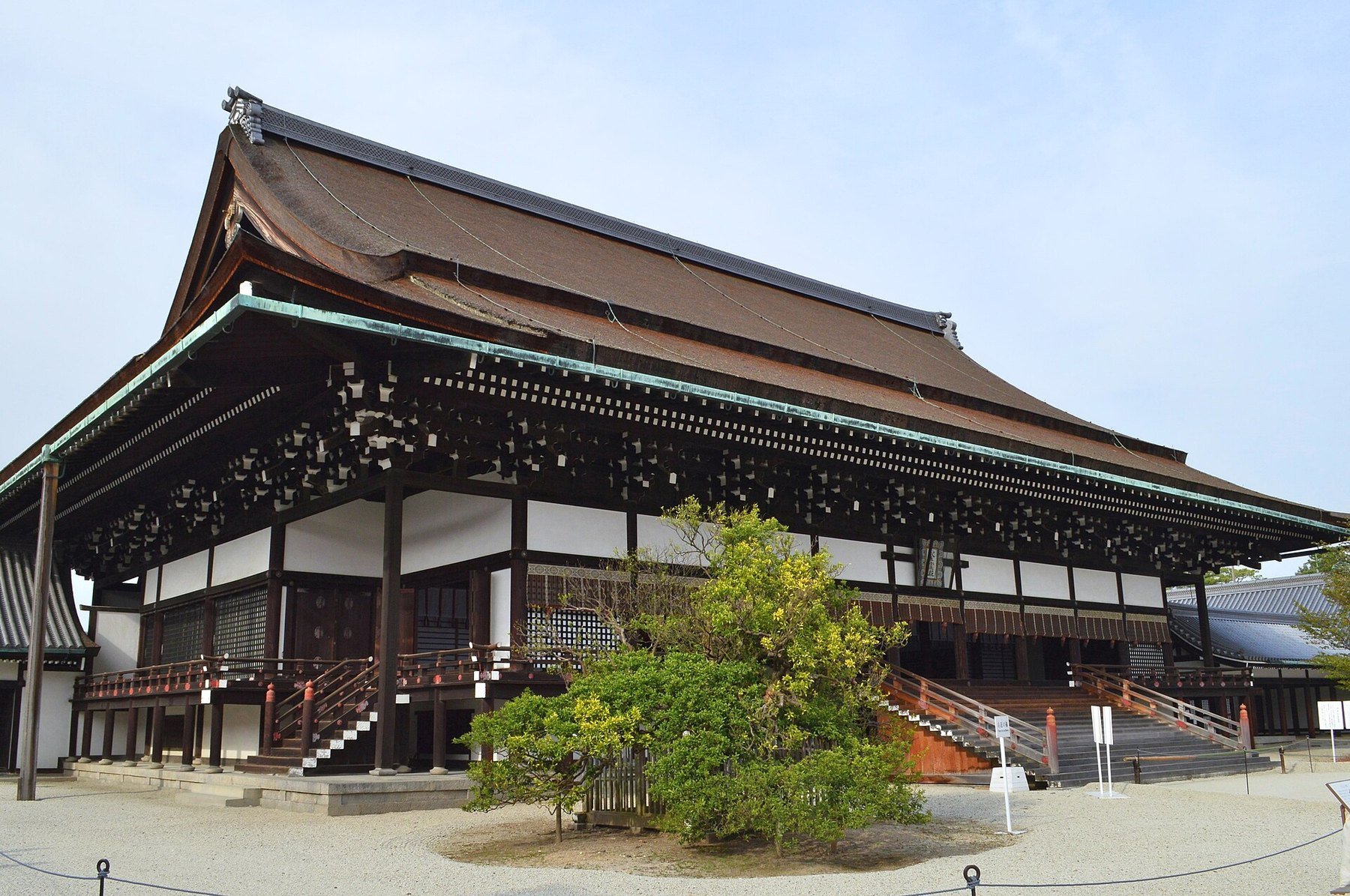
Kyoto's rules are short and all point the same way: no loudspeakers. Chion-in states: “境内での、マイク、拡声器類の使用は禁止します。” Microphones and loudspeakers are banned within the precincts, and visitors who ignore staff may be asked to leave.
Kyoto Gyoen National Garden bans bringing in or using “楽器・拡声器・音楽再生機・ホイッスル等の大きな音が出る器具”, loud devices such as instruments, loudspeakers, music players and whistles, as well as flags and banners. At the Kyoto Imperial Palace, “拡声器の使用”, the use of loudspeakers, is prohibited, and groups are asked to contact the palace in advance. The Imperial Household Agency offers its own free audio guide app.
Where can no listening system be used?
At Kenninji in Kyoto and inside Nanjing Museum. Kenninji's notice of 24 March 2026 says: “●拡声器・マイク・イヤホンなどについては使用しないでください。” Do not use loudspeakers, microphones, earphones and similar. Groups of 15 or more must apply 10 days ahead and say whether a guide will explain. A rented whisper set and a phone-based system both rely on earphones, so neither can be used inside.
Nanjing Museum asks visitors not to bring “扩音器、讲解发射器、耳麦”, megaphones, narration transmitters and headset microphones. Plan any listening system for outside these two sites only.
Where does a phone-based system fit?
Where the texts ban only open sound, a system that keeps the guide's voice in the guests' earphones matches the aim of the rule, though no text names one. Wuhou Shrine in Chengdu even asks listeners of its own phone audio guide to wear earphones.
With Your Next Tours, the guide speaks into their phone and guests scan a QR code, then listen in their own phone's browser through their own earphones. A portable WiFi router carries the broadcast, so no internet is needed during the tour. Before relying on any system at a specific site, ask the site or your local agency in writing. For indoor rules elsewhere, see what museums restrict.
What should guides check before a China or Japan tour?
- Leave megaphones and waist amplifiers at home; at the Forbidden City they are checked at the gate.
- Ask your local agency who may narrate at each site: Beijing's World Heritage sites need a site-issued narrator certificate, and Chengdu and Xi'an museums require advance applications.
- At Kenninji and Nanjing Museum, brief the group outside and plan no listening equipment inside.
- At Kenninji, apply 10 days ahead for groups of 15 or more and state that a guide will explain.
- Where group devices are allowed, ask guests to bring earphones and keep your own voice low.
Frequently asked questions
Is a headset required for tour groups in China?
Can foreign guides narrate inside the Forbidden City?
Do Japanese temples allow whisper systems?
Do guests need earphones?
Try it on your next tour
Your guests already carry the receiver. Install the guide app, create a tour and share its QR code before you enter a site that allows group devices: guests listen on their own phones and earphones while you speak quietly. See how the broadcast works and what renting receivers costs.
Sources
Official sources
Translations of the rule texts are ours; the original wording is authoritative.
Related articles
 GuidesHow long should a group spend at an archaeological site?
 GuidesUS walking tour rules on loudspeakers and group size: Savannah, Charleston, New Orleans and Salem (2026)
 GuidesGroup audio rules at the Rijksmuseum, Van Gogh Museum and other Amsterdam sites (2026)
 GuidesSintra's palaces require radio guides for more than ten visitors per guide, and you bring your own (2026)
 GuidesWhich Madrid museums let groups bring their own headsets? Prado, Reina Sofía and Thyssen (2026)
 GuidesHeadphone rules for guided groups at Wawel, Warsaw's Royal Castle and Auschwitz (2026)