
How long should a group spend at an archaeological site?
Summarize with AI:ChatGPTClaudePerplexityGrokGoogle AI Mode
Every site has a number attached to it -- two hours for this, ninety minutes for that. Those numbers are usually honest and almost always wrong for a group, because they describe one person walking at their own pace and stopping when they feel like it.
A group does not have a pace. It has a series of transitions, and the transitions are where the time goes.
Why do groups take longer than the guidebook says?
Because a stop costs more than the talking in it. Each one has a fixed overhead: bringing the group together, waiting for the last few, getting attention, and then releasing them again afterwards. In our own timings that overhead runs to several minutes per stop regardless of how long the explanation lasts.
That is why a route with twelve short stops runs longer than one with six longer ones, even when the total speaking time is identical.
| Route shape | Speaking time | Overhead | Realistic total |
|---|---|---|---|
| 12 short stops | 60 min | 12 x gather-and-start | Longest |
| 6 medium stops | 60 min | 6 x gather-and-start | Middle |
| 4 long stops | 60 min | 4 x gather-and-start | Shortest |
The arithmetic is unromantic but it is the single biggest lever most guides have over their schedule.
What should a stop plan actually contain?
Times per stop, not a total for the site. A total tells you whether you failed; per-stop times tell you where, and early enough to change something.
- Give each stop a planned duration and write it down before the tour, not after.
- Add the transition to the next stop as its own line. Walking three hundred metres with thirty people is not free.
- Mark one stop as the cut. When you are behind, you drop that one -- decided in advance, not improvised at the gate.
- Put the least-missable thing early. Weather, crowds and delays all eat the end of a route, never the beginning.
- Record actuals afterwards. After two seasons your own numbers are better than any published figure.
Where does the time actually disappear?
Two places, in our field notes. The first is the entrance, where ticketing, cards and turnstiles absorb a chunk that is easy to leave out of a plan entirely. The second is the exit, where a group that has been together for two hours suddenly needs the toilet, the shop and a photograph.
Neither is guiding, and neither shows up in a published duration. Both belong in yours.
Frequently asked questions
How much overhead should I budget per stop?
Does a broadcast system change the timings?
Should I publish a duration to customers?
Where do I record stop timings?
Build the route around transitions
If your routes routinely run long, the cause is more likely stop count than pace. Our destination field notes publish per-stop walking order and durations for the sites we have tested, and you can see how the broadcast works if repetition is what is eating your schedule.
Sources
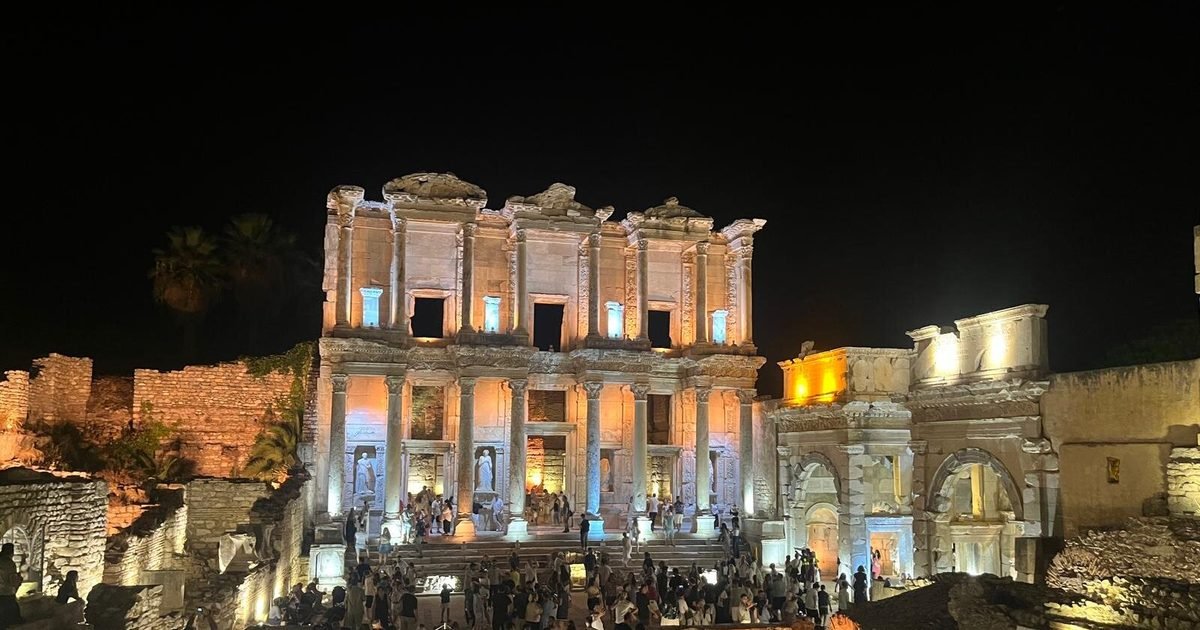
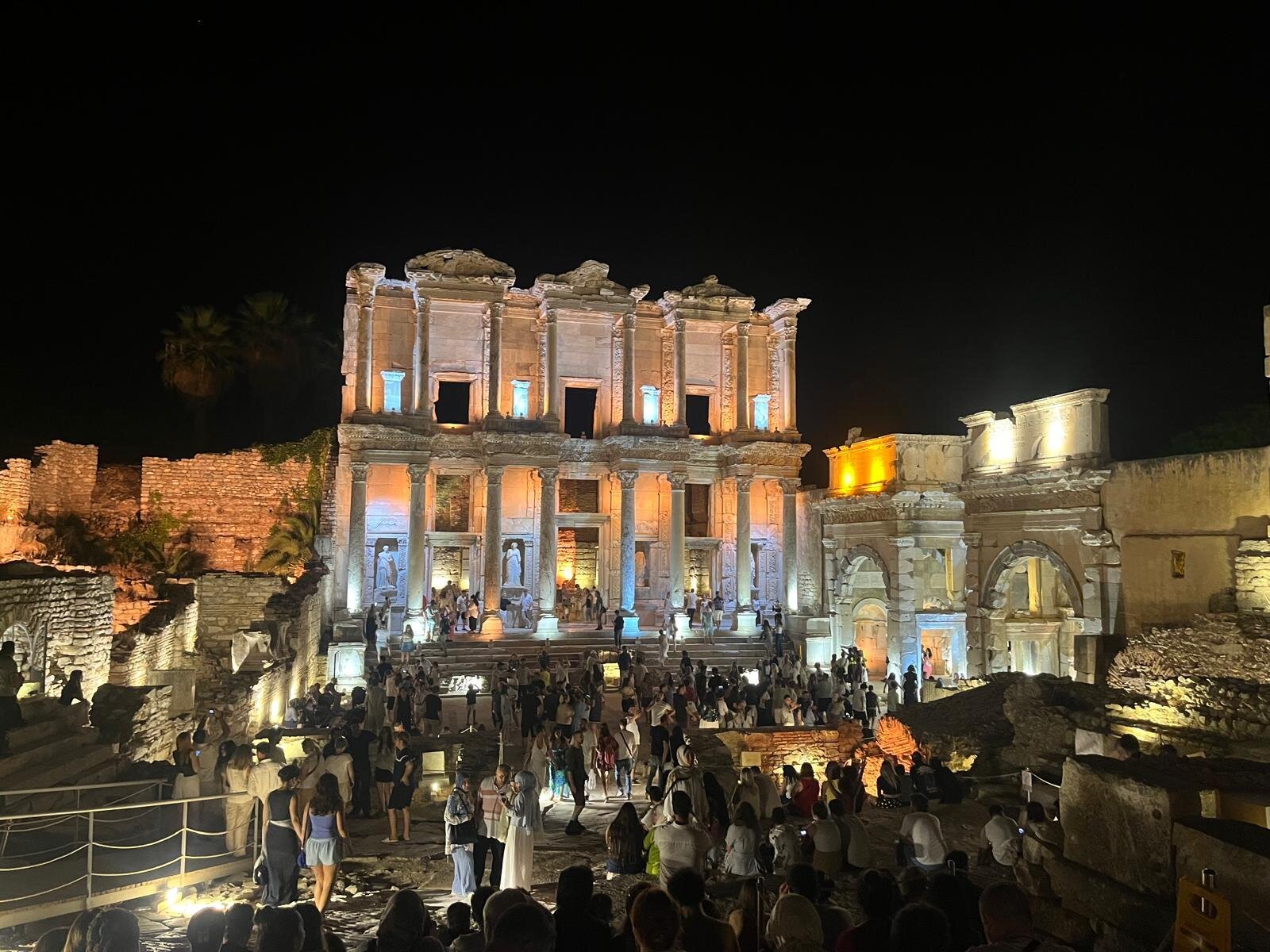
Timing observations come from our own field tests at Ephesus, Miletus, Didyma, Göbeklitepe and Karahantepe. Photograph is our own. Per-stop durations for specific sites are published on our destination pages rather than estimated here.
Places in this post
Related articles
 GuidesQuiet guiding in China and Japan: loudspeaker bans from the Forbidden City to Kyoto's temples (2026)
 GuidesUS walking tour rules on loudspeakers and group size: Savannah, Charleston, New Orleans and Salem (2026)
 GuidesGroup audio rules at the Rijksmuseum, Van Gogh Museum and other Amsterdam sites (2026)
 GuidesSintra's palaces require radio guides for more than ten visitors per guide, and you bring your own (2026)
 GuidesWhich Madrid museums let groups bring their own headsets? Prado, Reina Sofía and Thyssen (2026)
 GuidesHeadphone rules for guided groups at Wawel, Warsaw's Royal Castle and Auschwitz (2026)