Phaselis
A paved street through pine woods connecting two harbours, with a swimming beach at the end of it. The archaeology has to be delivered before the group sees the water.
- Location
- Kemer, Antalya
- Type
- Ancient city
- Typical visit
- 2 h
- Walking time
- 1 h
- Coordinates
- 36.5229, 30.5524
Summarize with AI:ChatGPTClaudePerplexityGrokGoogle AI Mode
Phaselis had three natural harbours, and the ancient main street runs between two of them, paved and lined with the foundations of shops, baths and an agora. Pine woods have grown over the whole site, so unlike almost every other coastal ruin in Turkey this one has shade.
Alexander wintered here in 334-333 BC. The site sits inside a national park, and the southern bay is a working swimming beach.
The bay decides your running order
Groups come to Phaselis knowing they can swim. From the moment the water is visible, the ruins are competing with it, and they lose.
So the sequence is fixed: aqueduct and street first, gate second, water last. Say when the swimming starts and stick to it. A group that has been given a time will listen until then; a group that has not will start drifting towards the beach at the first gap in your sentence.
Short distances, real shade
The aqueduct is 260 m from Hadrian's Gate, with the main street running between them and the bath complex 66 m off it. This is one of the smallest sites on the coast.
The pines matter more than the distances. They give the group somewhere to stand that is not in full sun, which on this coast is rare enough to build the visit around -- do the longest piece of narration on the street, under the trees, not at the gate in the open.
Practical notes
- The aqueduct is 260 m from Hadrian's Gate, with the main street running between them.
- The site is wooded, so there is genuine shade -- unusual on this coast.
- The southern bay is a swimming beach and the group knows it.
- The site is inside the Olympos Beydağları national park; vehicles stop at the entrance.
- Phaselis is not on the UNESCO World Heritage List.
Walking order
The order we use, with the time each stop takes at a normal group pace.
The aqueduct
The aqueduct line at the north end, near the entrance.
The main street
The paved street linking two of the three harbours.
Hadrian's Gate
The monumental gate at the south end of the street.
3 stops · 1 h

36.5229, 30.5524
Coordinates are for orientation, not for navigation.
Map data © OpenStreetMap contributors.
Notes for guides
What a guide needs to know before standing in front of a group here. Written from our own field work; where we have not verified something, it is not listed.
- RouteAqueduct, main street, Hadrian's Gate, then the water. Reversing it means narrating to a group in swimwear.
- TimingAnnounce the swim time at the start and hold to it. A group with a stated time listens; a group without one drifts.
- Being heardPines overhead and no hard surfaces: the street absorbs rather than reflects. Distance to the back of the group is the constraint, not echo.
- CrowdsIn summer the bay fills from mid-morning. Arrive early enough that the archaeology happens before the beach crowd does.
- TipDo the longest stop on the shaded street rather than at the gate. It is the only site on this coast where you can choose shade.
Photographs
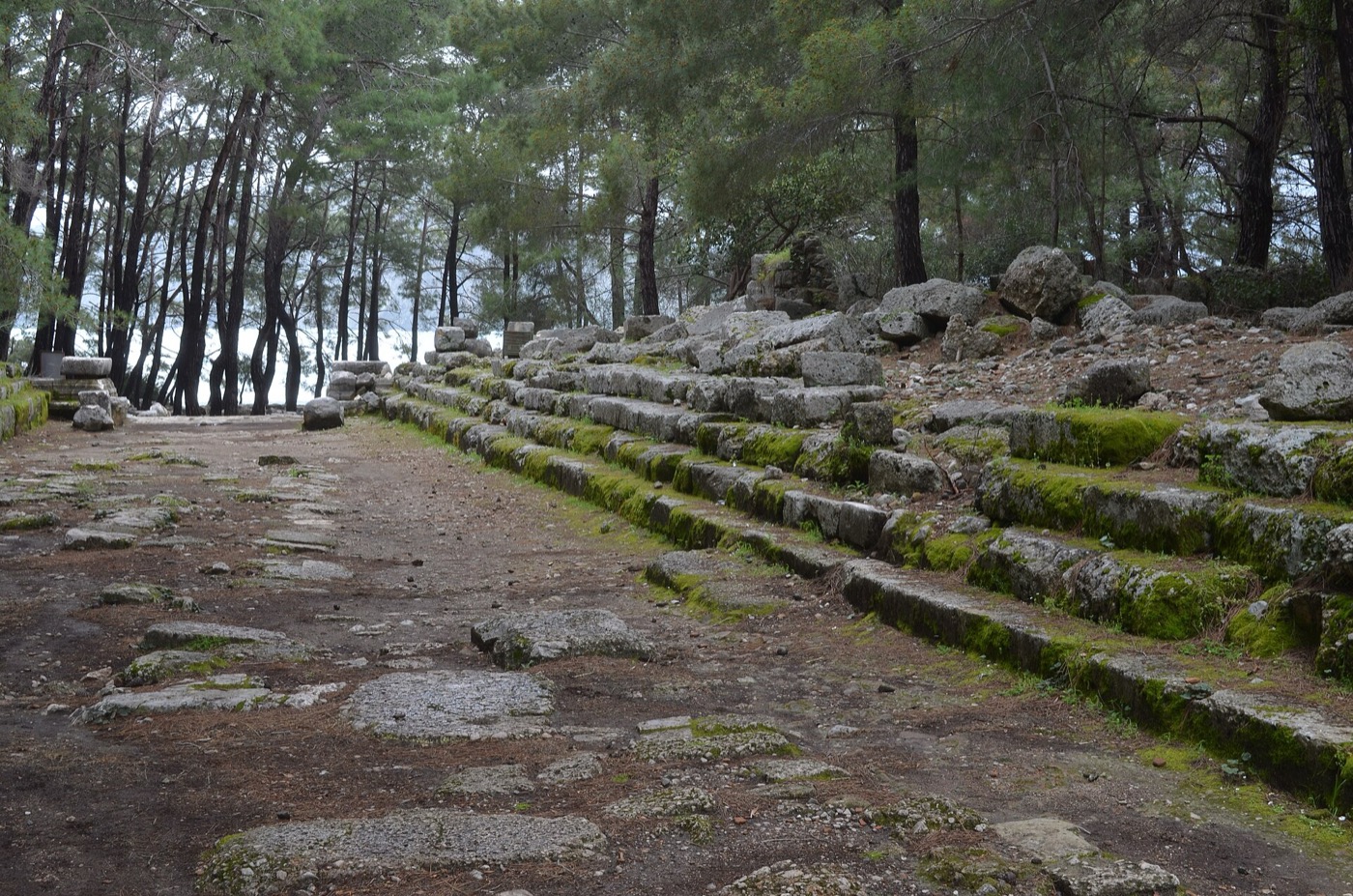
Photo: 1089hruskapetr (CC BY 3.0)
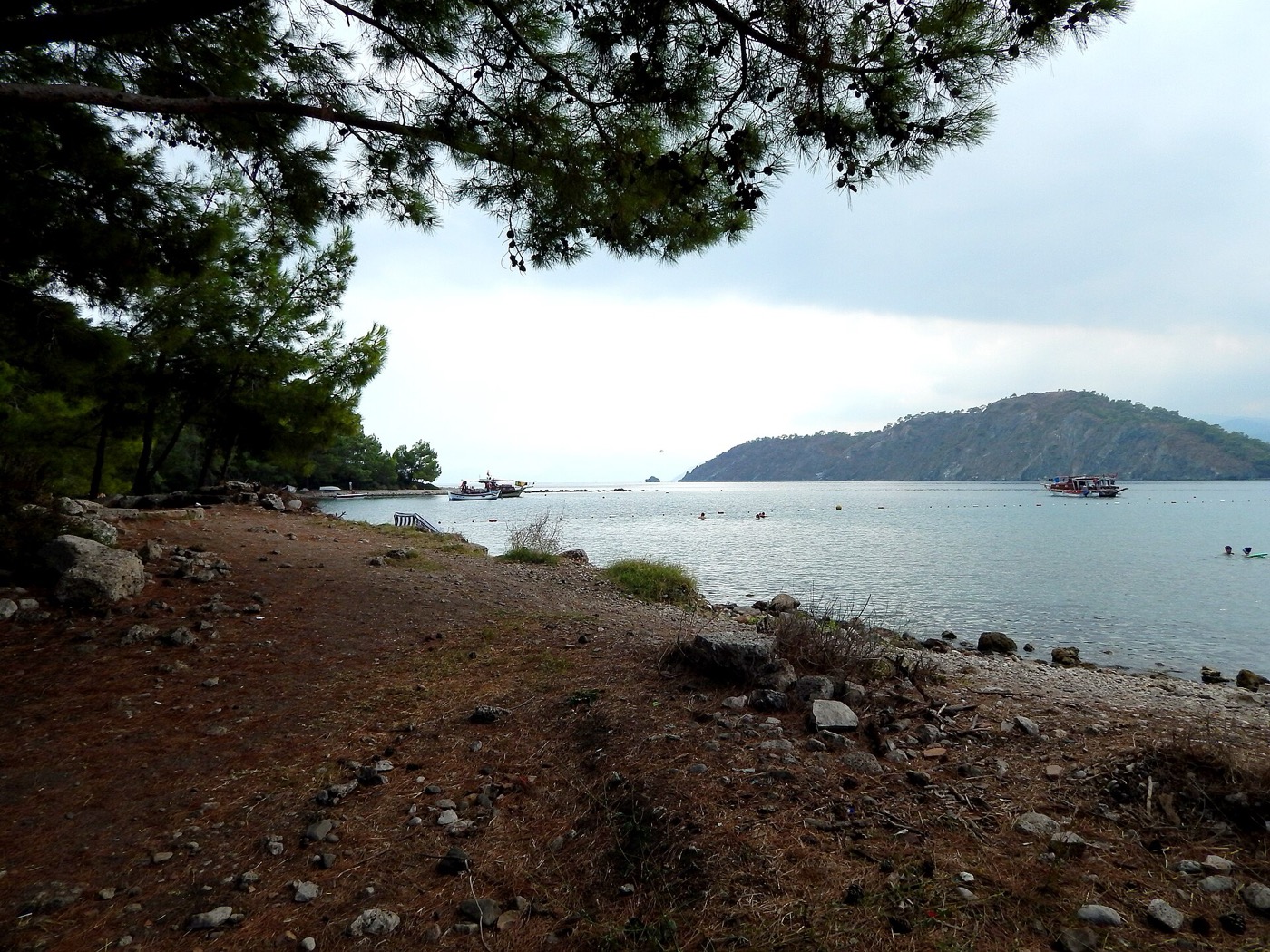
Photo: Sinan Şahin (CC BY 3.0)


Common questions
- How long does a group need at Phaselis?
- About two hours including time at the bay. The archaeology itself is short -- the aqueduct is only 260 m from Hadrian's Gate.
- In what order should a group see Phaselis?
- Aqueduct, main street, Hadrian's Gate, then the water. Once the bay is in view the ruins cannot compete, so the swim goes last and its start time is announced up front.
- Is there shade at Phaselis?
- Yes, unusually for this coast. Pine woods cover the site, so the main street gives the group somewhere to stand out of the sun. Plan the longest stop there.
- Can you swim at Phaselis?
- Yes, the southern bay is a swimming beach and it is inside the same site entrance.
Related articles
Sources
Facts on this page come from the sources below. Photographs are credited individually.