
US walking tour rules on loudspeakers and group size: Savannah, Charleston, New Orleans and Salem (2026)
Summarize with AI:ChatGPTClaudePerplexityGrokGoogle AI Mode
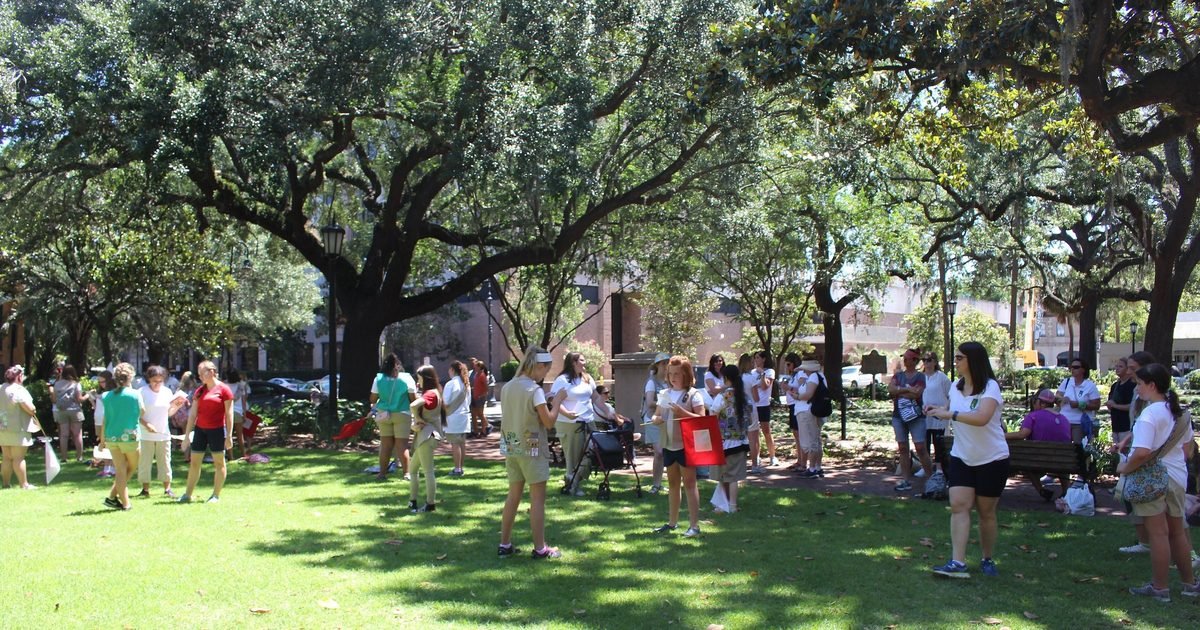
Several historic US cities write walking tour rules into their city code, and the pattern repeats: no voice amplification and a cap on group size. Savannah, Charleston, New Orleans and Beaufort ban amplifiers outright. Salem goes further and charges a lower licence fee to guides who do without one. None of these codes requires headsets, but with 20 to 30 people on a sidewalk, earphones are the practical way for everyone to hear an unamplified guide.
Which US cities ban amplification on walking tours?
Savannah, Charleston, New Orleans and Beaufort ban voice amplification on walking tours and cap the group between 20 and 30. Salem bans amplification on several downtown streets and in one district at night, and sizes its guide licences by group. The table lists each rule with its code section.
| City | What is banned | Group cap | Code section | In force since |
|---|---|---|---|---|
| Savannah, Georgia | Voice amplification systems | 30 guests | Sec. 6-1581 | 24 October 2019 |
| Charleston, South Carolina | Amplifying devices | 20 people, guide not counted | Sec. 29-261, 29-262 | 22 September 1998 |
| New Orleans, Louisiana | Voice amplifiers | 28 patrons | Sec. 30-1489 | 17 July 2003 |
| Beaufort, South Carolina | Speaker phones, amplification devices | 20 guests | Sec. 7-11074 | 8 June 2004 |
| Salem, Massachusetts | Amplification on named streets; B5 district after 8 p.m. | Licences for 10, 29 or 40 | Sec. 40-27, 40-30 | 1 January 2025 |
Each city also has an entry on our tour group headset rules page, for example Salem.
What do the city codes say?
The wording is short and direct. Savannah's Sec. 6-1581 reads: “Voice amplification systems are forbidden. Number of guests. Walking tours are limited to 30 guests.” The same section asks guides to keep participants' noise at a conversational level.
Charleston's Sec. 29-262 reads: “The use of an amplifying device while conducting a walking tour is prohibited.” Sec. 29-261 caps walking tours for hire on the public right-of-way at 20 people, excluding the guide; a bigger group must split, with a guide for each part. School groups are exempt from the size limit.
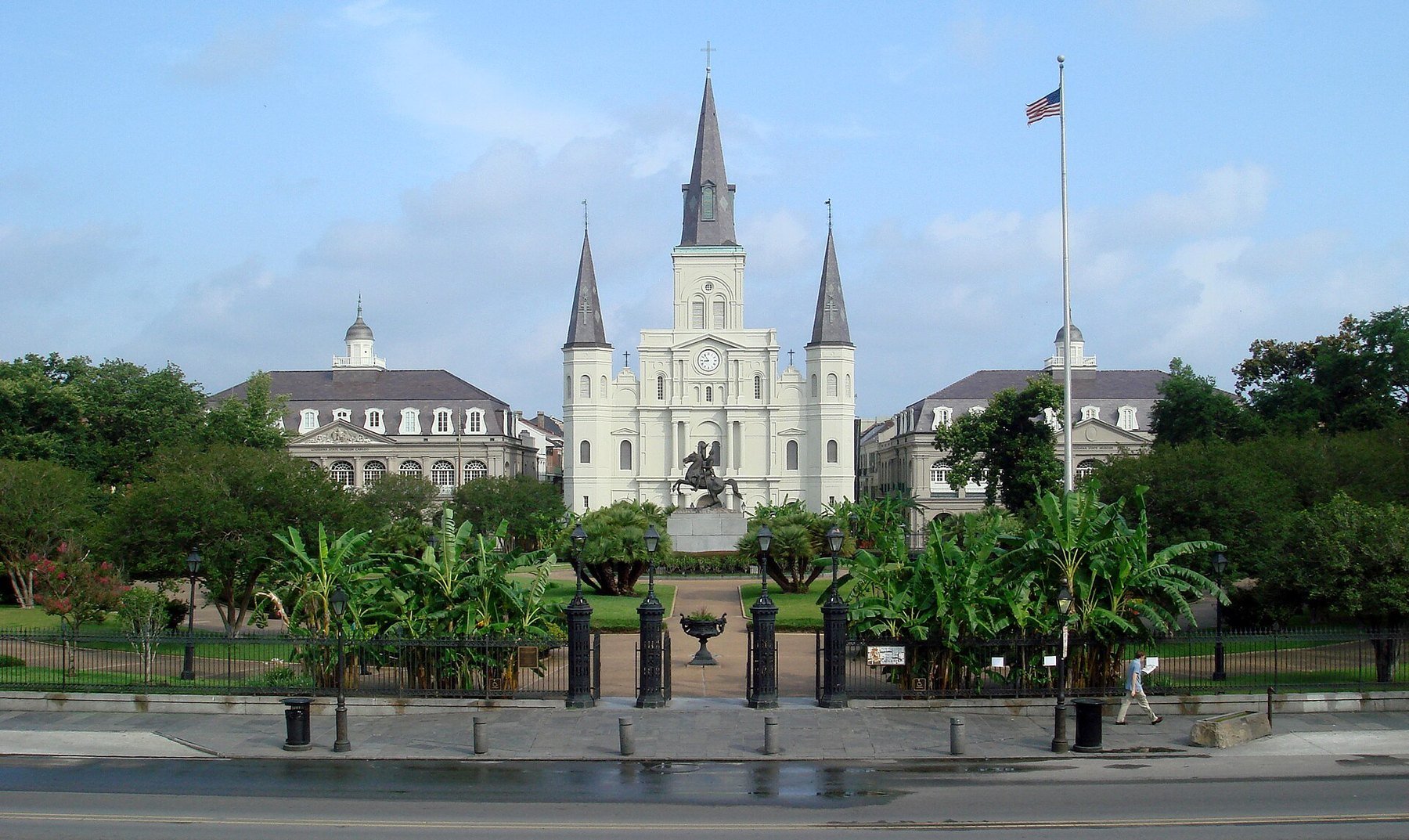
New Orleans' Sec. 30-1489 says: “(1) Tour guides shall not be allowed to use voice amplifiers on walking tours. [...] (3) Tour groups shall be limited to 28 patrons per tour.” Groups must also stay 50 feet apart while narrating, and tours end by 10 p.m., or 6 p.m. in the Garden District.
Beaufort's Sec. 7-11074 says: “(e) Speaker phones and amplification devices are prohibited on walking tours.” Narration must follow the city noise ordinance, groups are limited to 20 guests, and guides must be certified by the city.
How does Salem reward guides who skip amplification?
Salem is the only city here that pays guides to go without amplification. Since 1 January 2025, its code has said: “Public guides not utilizing any form of amplification after January, 2025 shall be eligible for a fee discount as provided in section 14-38 of this Code.” The fee schedule lists the discount as “Wireless communication system discount .....50.00”, a USD 50 reduction.
Licences come in three sizes: tours of up to 10, 29 or 40 participants, not counting the guide, for USD 150, 250 or 350 a year. Voice amplification is banned on Brown Street, Howard Street and other named streets, and in the B5 district after 8 p.m. Three violation notices in one licence period lead to a revocation hearing.
The code does not define a wireless communication system. Ask the Salem licensing department in writing whether the system you plan to use qualifies for the discount.
Does Charleston's definition cover headset systems?
The code does not say. Sec. 29-2 defines the term broadly: “Amplifying device shall mean any equipment or apparatus that broadens or magnifies the human voice, music or any other sound.” A system that sends the guide's voice only to listeners' earphones adds no sound to the street, but the definition does not draw that line. Before using any audio system on Charleston's streets, ask the city in writing.
What do Arlington National Cemetery and the National Gallery of Art require?
Both federal sites ask for headphones. Federal rules for Army national military cemeteries, 32 CFR 553.33, ban operating “a loudspeaker, or an audio device without a headset” at Arlington, and the National Gallery of Art asks visitors to use headphones with mobile devices.
Arlington's security page lists radios and walkie-talkies used without a headset among prohibited items. The same federal section bars speeches to assembled groups outside authorised ceremonies, so check how that applies to your commentary. Arlington's 2026 group guidance says the cemetery receives 2 to 3 million visitors a year.
At the National Gallery of Art, independently led groups are welcome without registration. The rule reads: “Use headphones when listening to mobile devices in the galleries. Please, no phone calls.”
Where does a phone-based system fit?
None of these codes names a device type or mentions phones as receivers. They all target sound in the street, and Beaufort bans speaker phones by name, so earphones are not optional.
With Your Next Tours, the guide speaks into their own phone and guests scan a QR code, then listen in their phone's browser through their own earphones. Nothing is rented, and a portable WiFi router carries the broadcast, so no internet is needed during the tour. Treat it like any audio system under these rules and confirm locally, in writing, before the season. To compare costs, see what renting receivers costs.
What should guides check before a US walking tour?
- Check each city's cap and split larger groups: 30 in Savannah, 28 in New Orleans, 20 in Charleston and Beaufort, your licence tier in Salem.
- Leave megaphones and portable speakers at home, and make sure no guest plays audio through a phone speaker.
- In Salem, choose the licence size before the season and ask whether your system qualifies for the USD 50 discount.
- In Charleston, get a written answer on whether your audio system counts as an amplifying device.
- Ask guests to bring earphones and carry a few spare wired pairs.
- At Arlington, keep commentary short and quiet, and check the rule on speeches to groups before you go.
Frequently asked questions
Do I need a licence to guide in these cities?
Can guests listen through their phone speakers?
Does the group cap include the guide?
Are school groups treated differently?
Try it on your next tour
Your guests already carry the receiver. Install the guide app, create a tour and share its QR code at the meeting point: guests listen on their own phones and earphones, and you narrate at conversational volume. See how the broadcast works and check pricing.
Sources
Official sources
Related articles
 GuidesQuiet guiding in China and Japan: loudspeaker bans from the Forbidden City to Kyoto's temples (2026)
 GuidesHow long should a group spend at an archaeological site?
 GuidesGroup audio rules at the Rijksmuseum, Van Gogh Museum and other Amsterdam sites (2026)
 GuidesSintra's palaces require radio guides for more than ten visitors per guide, and you bring your own (2026)
 GuidesWhich Madrid museums let groups bring their own headsets? Prado, Reina Sofía and Thyssen (2026)
 GuidesHeadphone rules for guided groups at Wawel, Warsaw's Royal Castle and Auschwitz (2026)