
How do you make a guide's voice heard in wind? What actually gets lost
Summarize with AI:ChatGPTClaudePerplexityGrokGoogle AI Mode
Guides describe wind as making them "harder to hear", which is true but not useful. What actually happens is more specific: wind and traffic noise mask the high end of the speech range, and consonants live there.
That is why a group in wind hears the shape of a sentence but loses the proper nouns. "Built in the second century by Hadrian" arrives as an unintelligible rhythm with the two words that mattered removed.
Why does shouting make it worse?
Because raising your voice does not raise all frequencies equally either. A strained voice pushes energy into the low and mid range, gets louder in the vowels, and does very little for the consonants you actually needed.
There is a second cost. A guide who shouts for six hours arrives at the last stop with no voice at all, and the last stop is usually the one the group remembers. Volume is a resource you spend, and wind is very good at making you spend it on nothing.
| Condition | What the group loses first | What actually helps |
|---|---|---|
| Steady coastal wind | Consonants -- names, numbers, dates | Backs to the wind, closer arc |
| Traffic on a city street | Everything below your voice, then clarity | Stop away from the kerb, use gaps in traffic |
| Another group nearby | Attention before intelligibility | Turn the group so the other guide is behind them |
| Wind directly on a microphone | The whole signal, in bursts | A windshield on the mic, not more gain |
Where should you stand when it is windy?
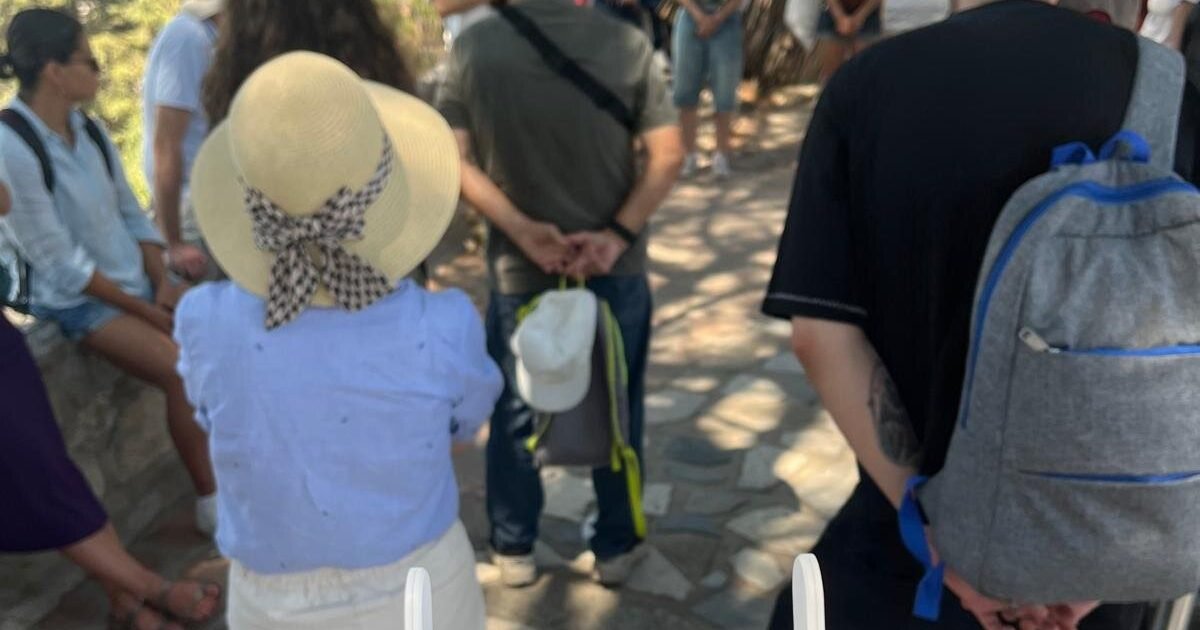
Put the wind at your back and the group in a tight arc facing you. Your voice travels with the air instead of against it, and the group's ears are shielded by their own bodies rather than facing into the flow.
At exposed coastal sites this single change is worth more than any equipment. On the Aegean coast we found the difference between facing into an afternoon onshore wind and turning ninety degrees was larger than the difference between speaking normally and shouting.
- Find the wind direction before you pick the stop, not after the group has assembled.
- Stand with your back to it; the group forms an arc facing you, backs to the flow.
- Use terrain: a wall, a column base or a slope shadow removes more wind than moving ten metres does.
- If you use a microphone, keep it close to the mouth and shielded -- distance is what lets wind noise in.
- Give the numbers twice. In wind, assume the first pass of any date or name did not arrive.
Does a broadcast system solve the wind problem?
It solves the listener half of it completely and the speaker half partly.
When the group listens in their own earphones, the wind between you and them stops mattering -- there is no acoustic path to disrupt. What remains is wind on your microphone, which is a hardware question rather than a physics-of-distance one, and a windshield handles it.
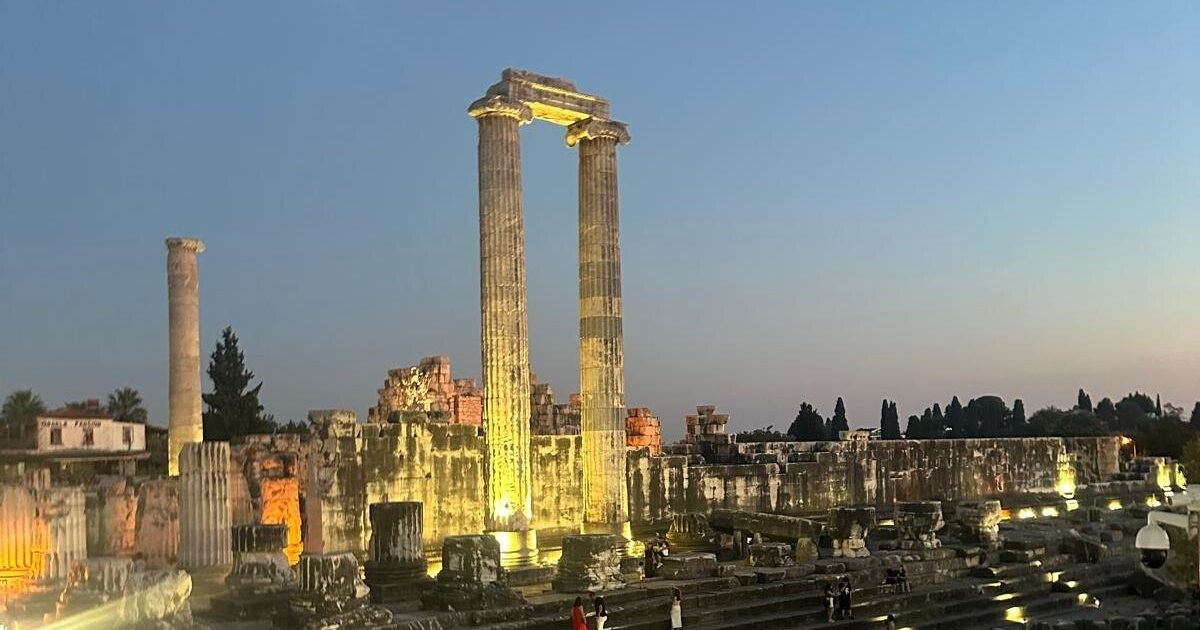
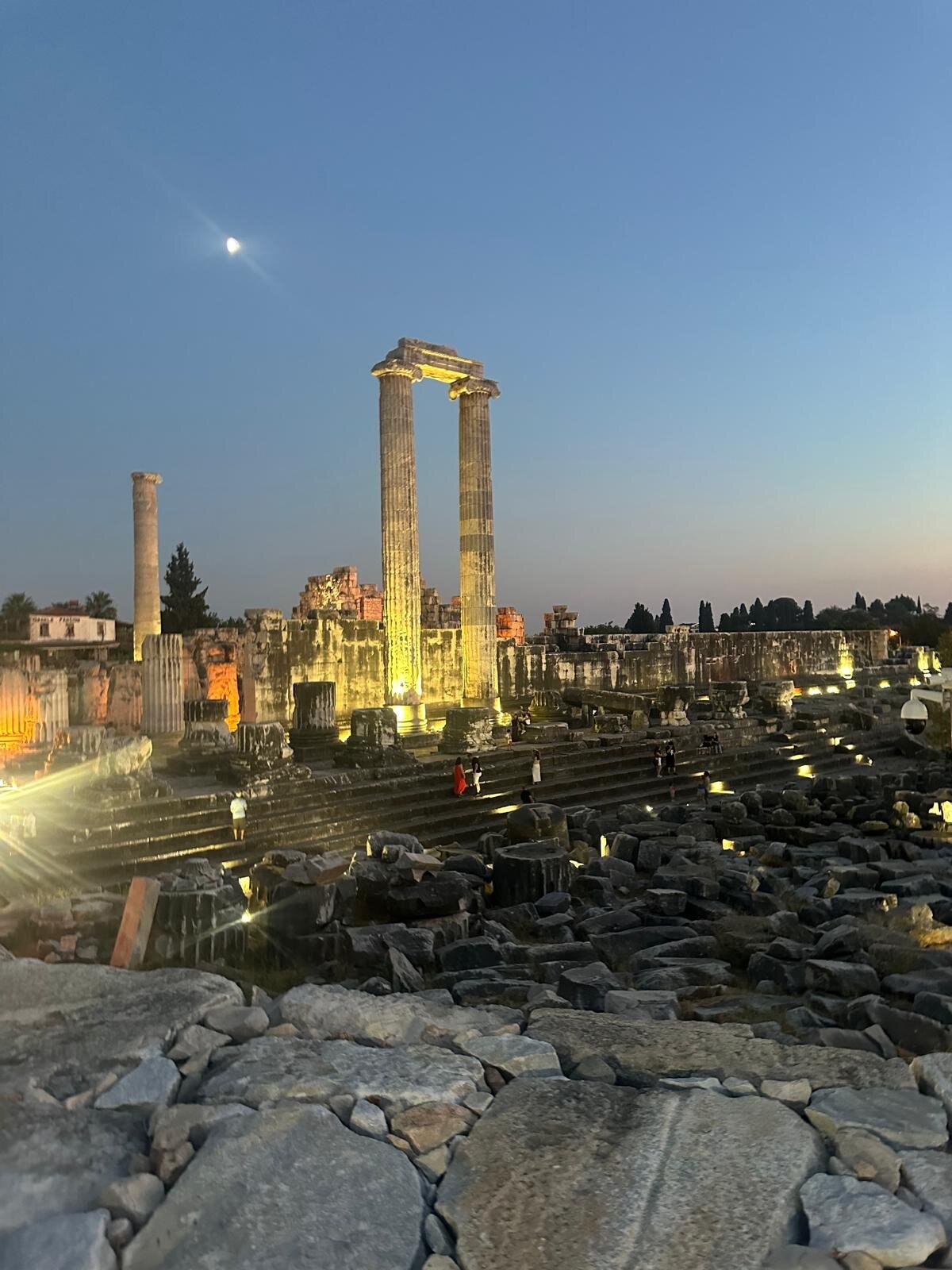
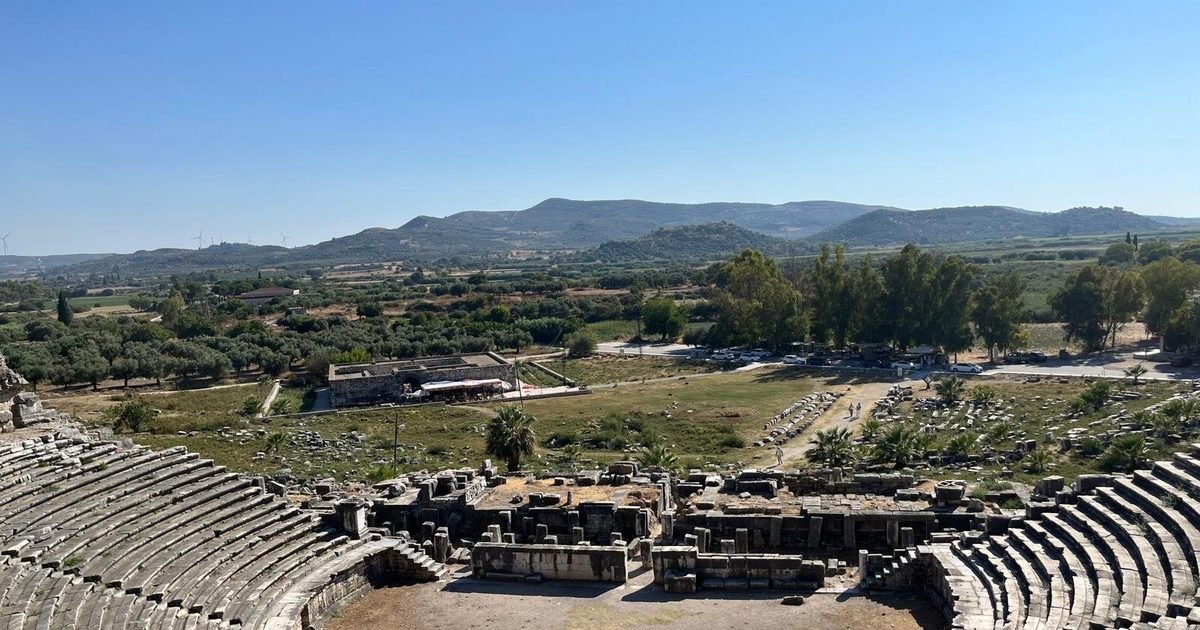
We tested this at Didyma and on the exposed ground at Miletus. The guide spoke at conversational volume in conditions where the previous approach had been to gather everyone into a tight huddle and shout.
Frequently asked questions
Why do I lose my voice on windy days specifically?
Does a portable speaker help outdoors?
What microphone works best in wind?
Does the broadcast work at exposed sites with no signal?
Should I repeat things in wind even with a broadcast?
Stop spending your voice on the wind
The positioning habits above cost nothing and work with any setup. If you are still arriving at the last stop with no voice, see how the broadcast works -- participants hear you in their own earphones, so the wind between you and them stops being part of the problem.
Sources
Field observations come from our own tests at Didyma, Miletus and Ephesus on the Aegean coast. Photograph is our own. The description of how noise masks speech reflects the general behaviour of high-frequency masking; specific conditions vary by site and day.
Places in this post
Related articles
 GuidesHeadsets are mandatory for Florence tour groups of more than eight (2026)
 GuidesYour group has scattered across a site. Now what?
 GuidesHow do you guide a group that does not share a language?
 GuidesDoes a tour audio system work underground? Signal, stone and what to carry
 GuidesCan a guide narrate out loud inside a museum? What the rules actually restrict
 GuidesHow to guide a 40-person group through an archaeological site in 2026