Knidos
Two harbours at the tip of a peninsula, an hour of winding road each way. The drive is the real cost of this site, and it should be priced into the day before you sell it.
- Location
- Datça, Muğla
- Type
- Ancient city
- Typical visit
- 2 h
- Walking time
- 50 min
- Coordinates
- 36.6863, 27.3740
Summarize with AI:ChatGPTClaudePerplexityGrokGoogle AI Mode
Knidos sits at the very tip of the Datça peninsula, where the Aegean meets the Mediterranean, with a harbour on each side of a narrow neck. The city was known for Praxiteles' Aphrodite, the first life-size female nude in Greek sculpture; the statue is lost and the round terrace that held its temple is what remains.
The astronomer Eudoxos came from here, and so did Sostratos, who designed the lighthouse at Alexandria.
The drive is the constraint
It is about 35 km from Datça, on a winding road, and it takes roughly an hour each way. That is two hours of coach time for a site you can walk in two.
That ratio has to be stated when the day is planned, not discovered on the road. A group that expects a short hop and gets an hour of switchbacks arrives already spent, and the site is exposed enough that it does not forgive a tired group.
Small site, big wind
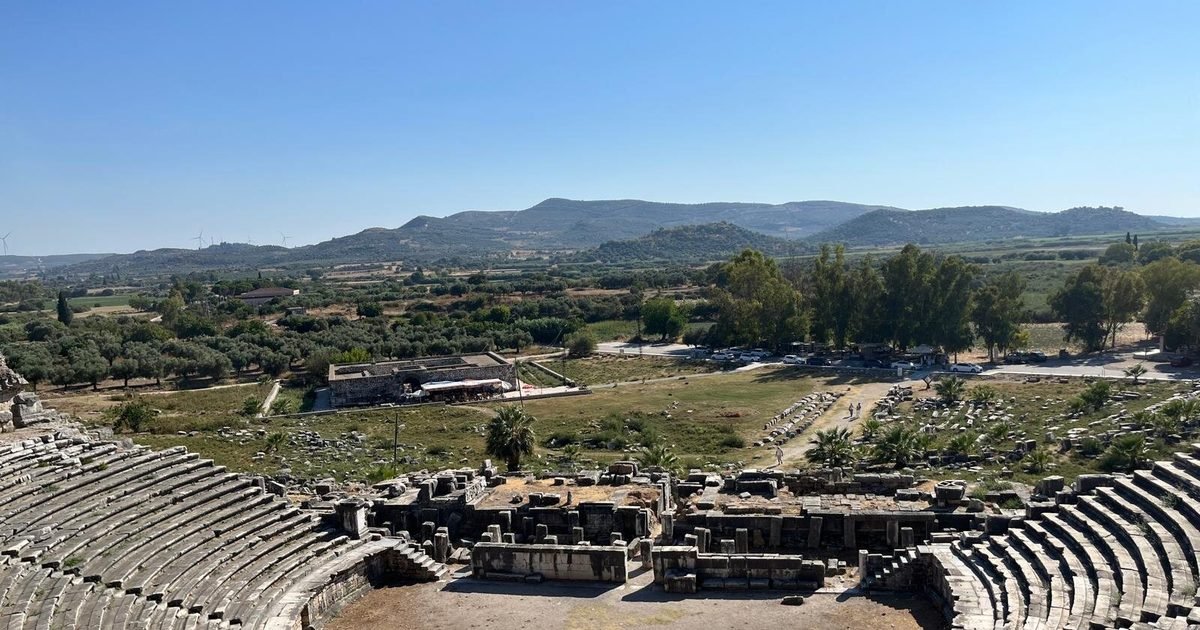
The theatre and the Aphrodite terrace are 367 m apart, uphill on the way out. Everything else on the standard route lies between them.
What makes it hard is not the distance but the position: this is a headland with open sea on two sides, and the wind is close to constant. On the terrace there is nothing at all to stand behind. Plan to say the substance at the theatre, which at least has a shape to it, and treat the terrace as a place to look rather than a place to talk.
Practical notes
- About 35 km from Datça on a winding road -- roughly an hour each way.
- The theatre and the Aphrodite terrace are 367 m apart, uphill westward.
- The site is a headland with sea on both sides; wind is close to constant.
- There is almost no shade, and the ground is stony.
- Knidos is not on the UNESCO World Heritage List.
Walking order
The order we use, with the time each stop takes at a normal group pace.
The lower theatre
The theatre above the harbour, at the east end of the site.
The Aphrodite terrace
The circular temple foundation on the upper terrace.
2 stops · 50 min

36.6863, 27.3740
Coordinates are for orientation, not for navigation.
Map data © OpenStreetMap contributors.
Notes for guides
What a guide needs to know before standing in front of a group here. Written from our own field work; where we have not verified something, it is not listed.
- TimingPrice the drive into the day: about an hour each way from Datça for a two-hour site. Say so when the day is sold, not on the road.
- Being heardA headland with open sea on two sides and near-constant wind. The terrace has nothing to stand behind; the theatre at least has a shape.
- RouteTheatre first, then the 367 m climb to the Aphrodite terrace. Do the talking at the theatre and let the terrace be the view.
- AccessStony ground and a steady climb westward. It is short but it is not flat.
- TipThe Aphrodite statue is lost, not moved. That is a different answer from the one groups expect, and it is worth giving before they ask where it went.
Photographs
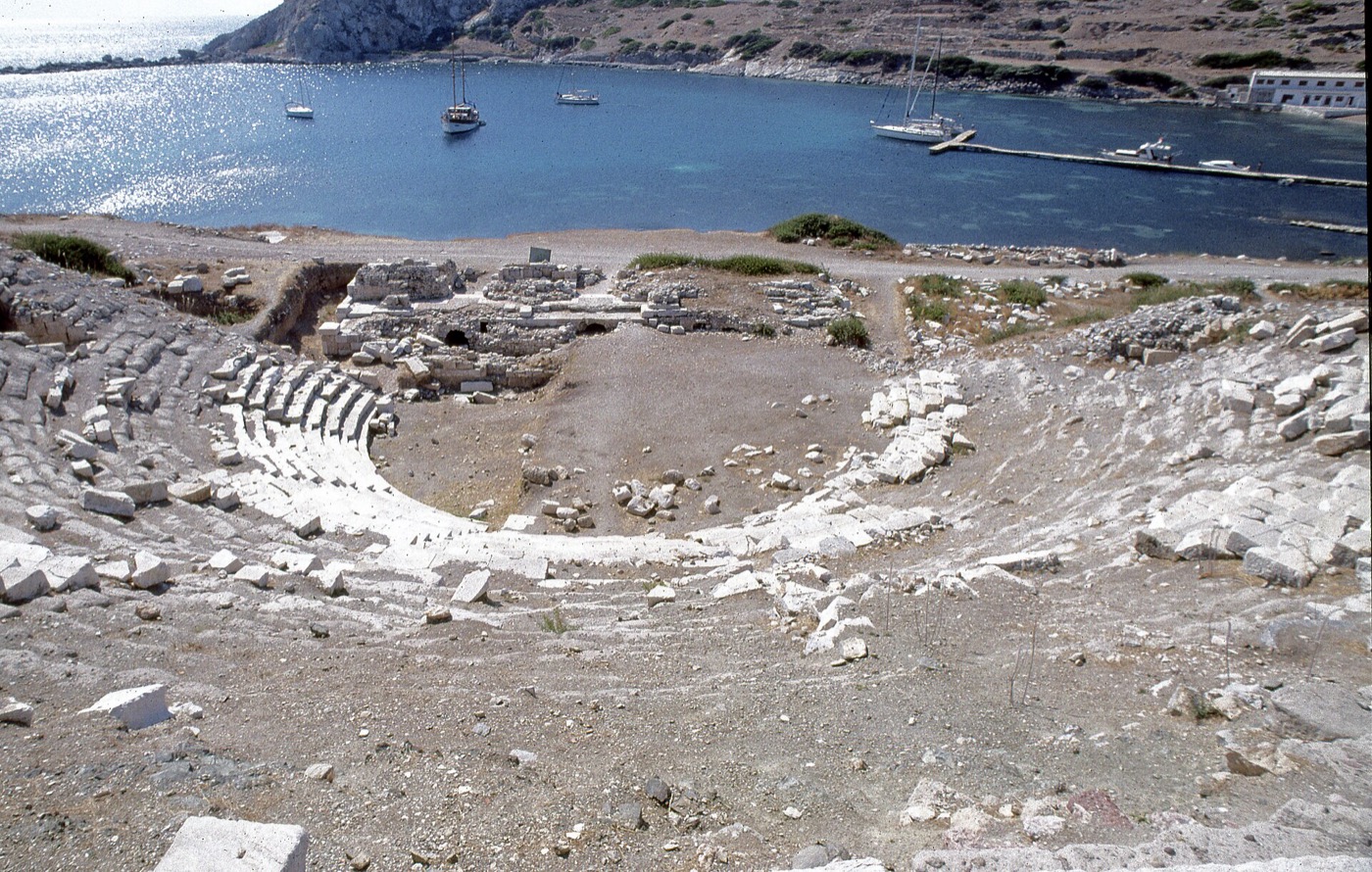
Photo: Dosseman (CC BY-SA 4.0)
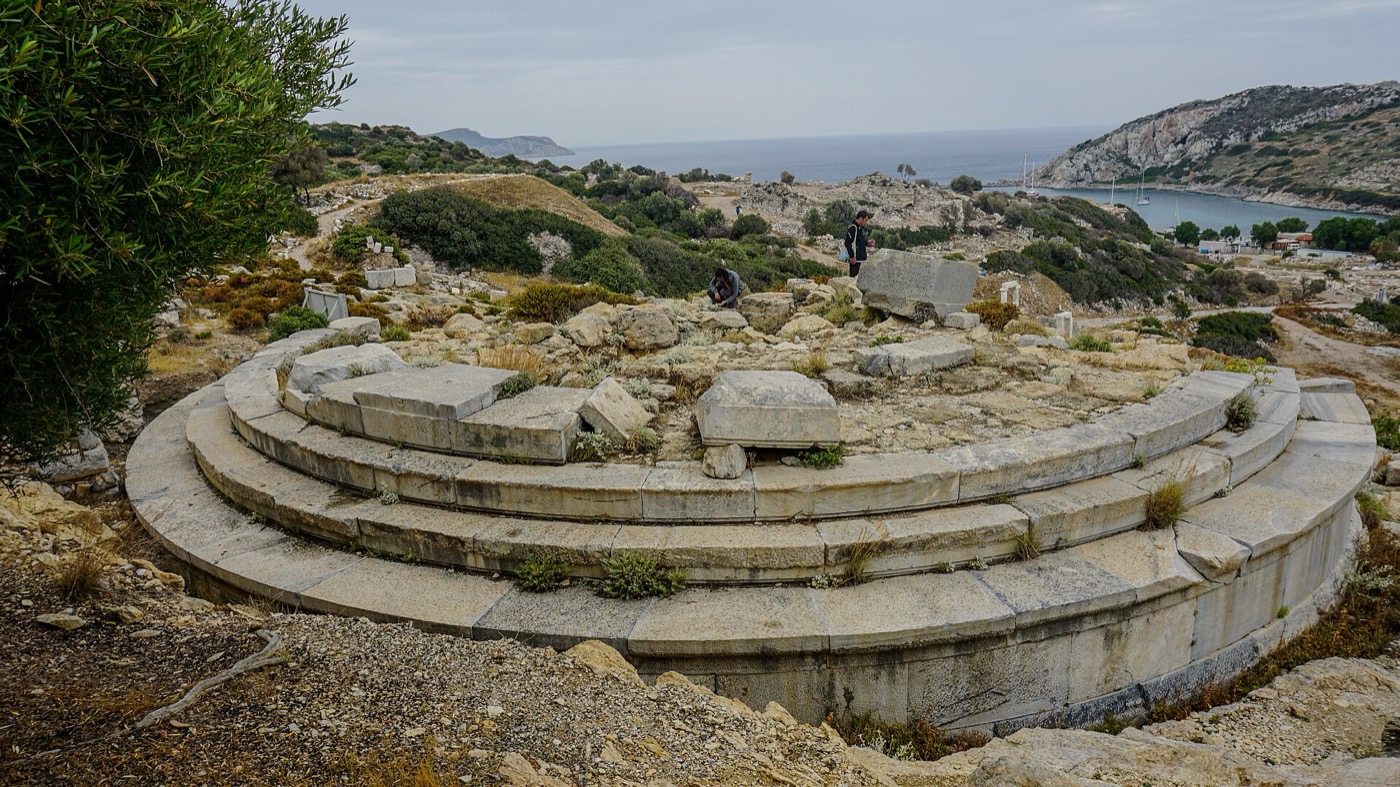
Photo: Aerdemsenturk (CC BY-SA 4.0)


Common questions
- How long does a group need at Knidos?
- About two hours on site. The bigger number is the drive: roughly an hour each way from Datça on a winding road.
- How far apart are the monuments at Knidos?
- The theatre and the Aphrodite terrace are 367 m apart, with the climb on the way out. Everything on the standard route lies between them.
- Where is the Aphrodite of Knidos?
- Lost. Praxiteles' statue does not survive, and copies elsewhere are Roman. What remains at Knidos is the circular terrace that held its temple.
- Is Knidos a UNESCO World Heritage Site?
- No. Knidos is not on the World Heritage List.
Related articles
Sources
Facts on this page come from the sources below. Photographs are credited individually.