
Miletus
Ionia's richest harbour city now sits eight kilometres inland: a wide, flat, shadeless site where a group spreads out within minutes, and one theatre where it does not.
- Location
- Didim, Aydın
- Type
- Ancient city
- Typical visit
- 2 h
- Walking time
- 1 h
- Coordinates
- 37.5311, 27.2756
Summarize with AI:ChatGPTClaudePerplexityGrokGoogle AI Mode
Miletus was the wealthiest harbour city in Ionia and the place where Greek philosophy begins: Thales, Anaximander and Anaximenes were all Milesians. From four harbours the city founded more than ninety colonies around the Black Sea and the Mediterranean.
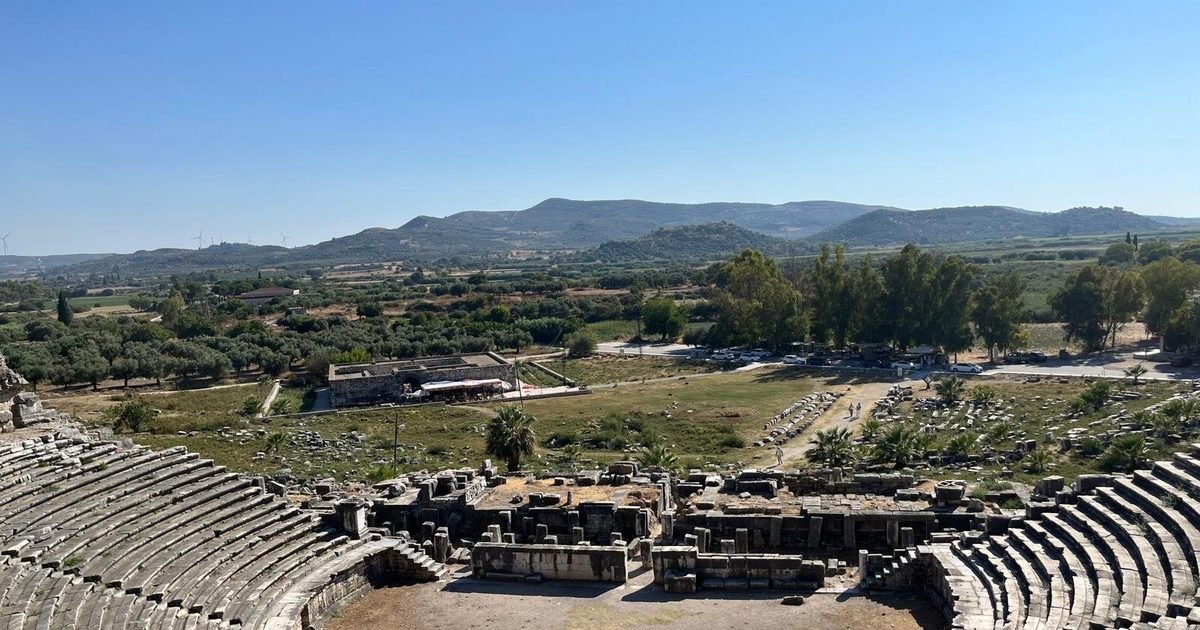
None of that is visible from the ground today. The Meander river silted the gulf shut, the sea is now about eight kilometres west, and the city stands in the middle of a flat alluvial plain.
Why this site is hard to guide
The site is wide, flat and almost entirely without shade. There is no natural funnel: once a group is past the theatre, people fan out across open ground toward whatever catches their eye, and the distance between you and the last listener grows fast.
The theatre is the exception, and it is worth knowing why. Its stepped seating puts every row slightly above the one in front, so a voice from below reaches the back without effort. That is the one place at Miletus where the ground works for you. Everywhere else it does not, and there is nothing to stop the wind coming off the plain.
The walk, in the order that works
Start at the theatre and finish at the İlyas Bey Mosque. The theatre stands immediately inside the entrance, it gives the group the scale of the city in one look, and its vaulted galleries are cool — a useful first stop before the open ground.
From there the route runs south past the Baths of Faustina to the mosque, which sits at the far edge of the site beside the road. Walking in this direction leaves the group near the exit instead of doubling back across unshaded ground in the middle of the day.
What to say, and where
The theatre carries the story of scale: fifteen thousand seats for a city whose harbours are now farmland. It is also the right place to explain the silting, because the old harbour plain is in view from the upper rows.
The Baths of Faustina carry the Roman layer, and the İlyas Bey Mosque carries the last one — a Menteşe-period complex built long after the Greek city had gone. Three layers, three stops, in the order you walk them.
Say early, at the theatre, that the Market Gate of Miletus is in Berlin. The gate is the single most famous thing the city produced, it is in the Pergamon Museum, and the empty ground where it stood is the least rewarding stop on the site. Answering this once at the start saves answering it repeatedly later.
Practical notes
- MüzeKart is valid at Miletus.
- Miletus Museum is about a kilometre from the site and is a separate stop.
- Priene and Didyma are close enough to combine with Miletus in one day — this is the classic route through the lower Meander.
- Outside the theatre galleries there is no shade anywhere on the site.
- In winter and early spring part of the site can stand under water, and the walkable line changes.
Miletus is covered by the museum pass, so entry is usually already settled for the group. If you are working out which card fits a mixed group, our museum cards page sets out what each one covers.
Walking order
The order we use, with the time each stop takes at a normal group pace.
The Theatre
Fifteen thousand seats and the vaulted Roman galleries beneath them. The stepped seating is the only place on site where the ground carries your voice.
Baths of Faustina
The bath complex built under the empress Faustina. Its rooms are enclosed, which makes them the second-quietest stop after the theatre.
İlyas Bey Mosque
The early-fifteenth-century complex of the Menteşe principality at the southern edge of the site, next to the road.
3 stops · 1 h
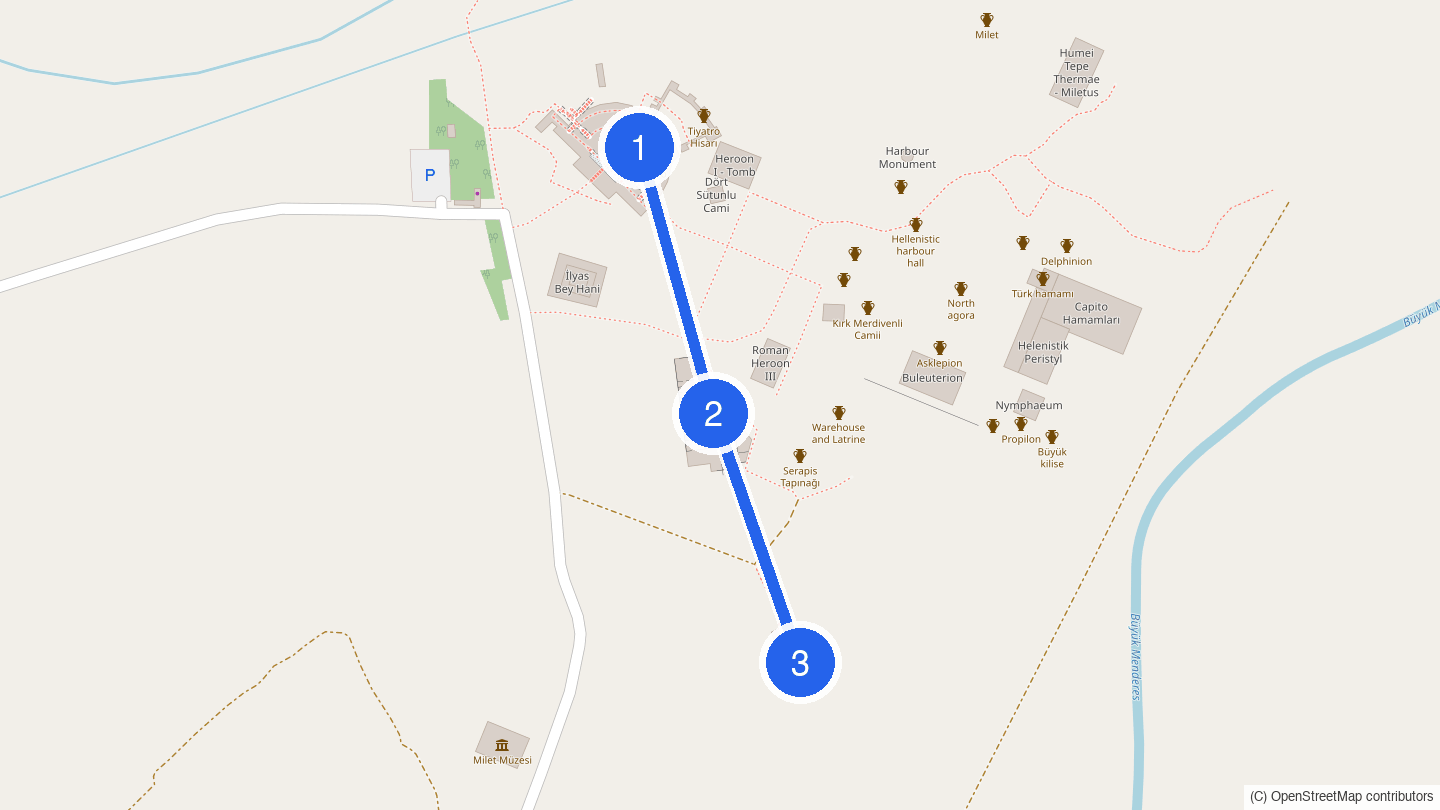
37.5311, 27.2756
Coordinates are for orientation, not for navigation.
Map data © OpenStreetMap contributors.
Notes for guides
What a guide needs to know before standing in front of a group here. Written from our own field work; where we have not verified something, it is not listed.
- RouteStart at the theatre and end at the İlyas Bey Mosque. The other direction sends the group back across the open middle of the site at the hottest hour.
- Being heardIn the theatre, put the group along one tier and speak from the tier below. On our August 2026 Aegean field test this was the one stop where a straight row of listeners worked better than an arc, because the stepped ground lifts each row clear of the one in front.
- Being heardPast the theatre nothing reflects your voice and nothing blocks the wind off the plain. On the coast we found that turning ninety degrees out of the wind did more for being heard than raising your voice did.
- AccessThe vaulted galleries under the theatre are the only shade on the site. Plan the long explanation there rather than in the open.
- TimingCheck the standing water before promising the mosque in winter or early spring. Part of the site floods and the walkable line moves from year to year.
- TipMention at the theatre that the Market Gate is in Berlin. Otherwise the question arrives at the empty foundation, where the answer is a disappointment.
Photographs
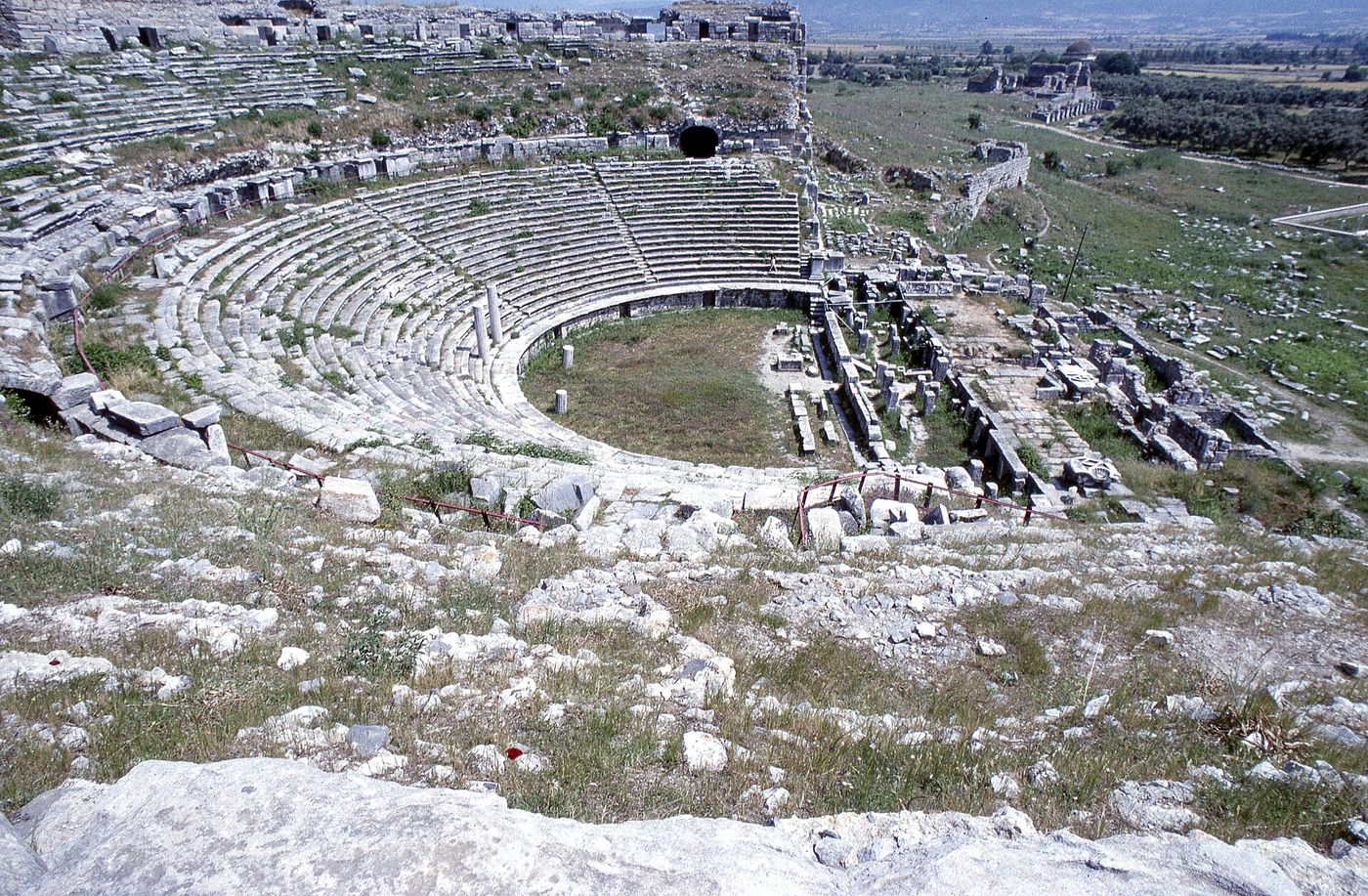
Photo: Dosseman (CC BY-SA 4.0)
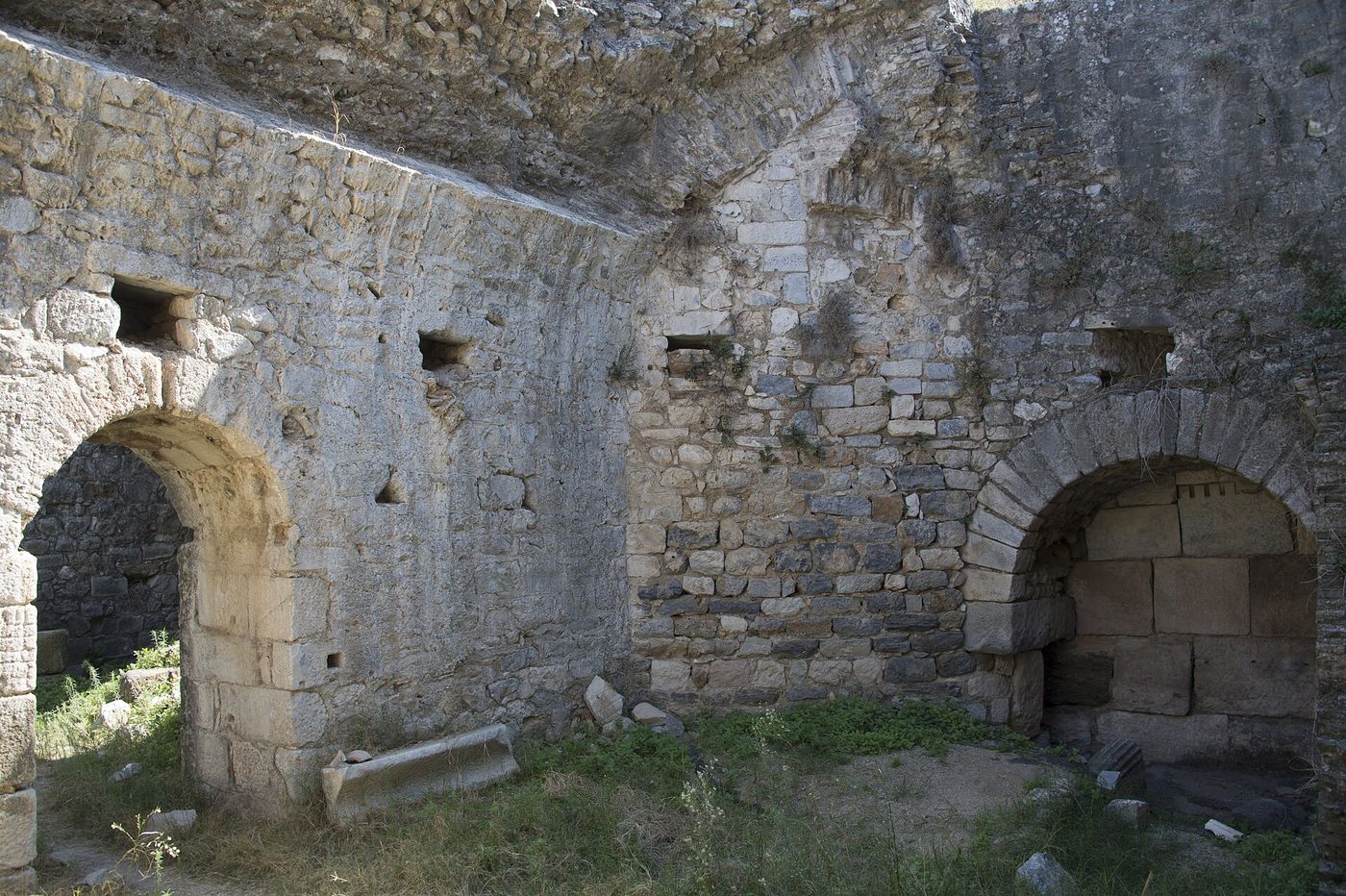
Photo: Dosseman (CC BY-SA 4.0)
Common questions
- How long does a group need at Miletus?
- About two hours at a normal group pace for the theatre, the Baths of Faustina and the İlyas Bey Mosque. The three narration stops add up to roughly an hour; the rest is walking across open ground.
- Can Miletus, Priene and Didyma be visited in one day?
- Yes. The three sites sit within about thirty kilometres of each other in the lower Meander plain and are routinely combined into a single day.
- Is MüzeKart valid at Miletus?
- Yes. Miletus is on the Ministry of Culture and Tourism's museum pass list, so pass holders enter without a separate ticket.
- Where is the Market Gate of Miletus?
- In Berlin, in the Pergamon Museum. It was excavated at Miletus and moved in the early twentieth century; only its foundation remains on site.
- Why is the theatre easier to narrate than the rest of the site?
- Because the seating is stepped. Each row sits above the one in front, so a voice from below reaches the back rows without carrying across bodies. On the open ground of the rest of the site there is no such help.
Related articles
Sources
Facts on this page come from the sources below. Photographs are credited individually.