Limyra
Spring water runs through the middle of the ruins, which is why the site is beautiful, why the footing is bad, and why almost nobody is there.
- Location
- Finike, Antalya
- Type
- Ancient city
- Typical visit
- 1 h
- Walking time
- 55 min
- Coordinates
- 36.3415, 30.1699
Summarize with AI:ChatGPTClaudePerplexityGrokGoogle AI Mode
Limyra was the capital of the Lycian king Perikle in the fourth century BC. Spring water rises inside the site and runs through it in channels, so parts of the ruins stand in or beside standing water.
The visible monuments are close together: a Roman theatre at the north edge beside the road, the Ptolemaion 121 m from it, and the cenotaph of Gaius Caesar -- Augustus's heir, who died here -- a further 154 m on.
The water is the whole character of the place
It makes the site green, quiet and photogenic in a way that dry Lycian ruins are not. It also means the ground is soft, the channels have to be crossed, and after rain some of the route is not walkable in ordinary shoes.
Check the conditions before you commit a group, and say what the footing is before people get out of the vehicle. This is not a site to discover halfway round that half the group cannot continue.
Who it is for
Limyra is nearly empty. On the Lycian coast, where the well-known sites are shared with several coaches, that is worth something: your group hears you, stops where you stop, and is not queuing behind anyone.
It suits a small group, a repeat visitor, or a day that already has a busy site on it and needs a quiet one to balance it. It does not suit a group expecting monumental architecture.
Practical notes
- Theatre to Ptolemaion is 121 m; Ptolemaion to the cenotaph another 154 m.
- Spring water runs through the site; the ground is soft and some sections are wet.
- The theatre sits beside the road at the north edge, so the walk starts there.
- The rock-cut tombs are on the slope above the site and are seen from below, not walked to.
- The site is quiet, which makes it easy to guide in and easy to undersell.
- Limyra is not on the UNESCO World Heritage List.
Walking order
The order we use, with the time each stop takes at a normal group pace.
The theatre
The Roman theatre beside the road, at the north edge of the site.
The Ptolemaion
The monumental tomb platform in the middle of the site.
The cenotaph
The monument to Gaius Caesar, among the water channels.
3 stops · 55 min

36.3415, 30.1699
Coordinates are for orientation, not for navigation.
Map data © OpenStreetMap contributors.
Notes for guides
What a guide needs to know before standing in front of a group here. Written from our own field work; where we have not verified something, it is not listed.
- AccessWet ground and water channels to cross. Say what the footing is before the group leaves the vehicle, not once half of them are stuck.
- RouteTheatre, Ptolemaion, cenotaph -- 275 m end to end. The order follows the road, so there is no reason to reverse it.
- CrowdsAlmost nobody else is here. This is the rare Lycian site where your group's attention is not being competed for.
- TimingAn hour is enough. Spring has the most water and the best colour; it also has the worst footing.
- TipPair it with a busy site rather than another quiet one. Limyra works best as the contrast in a day, not as the main event.
Photographs
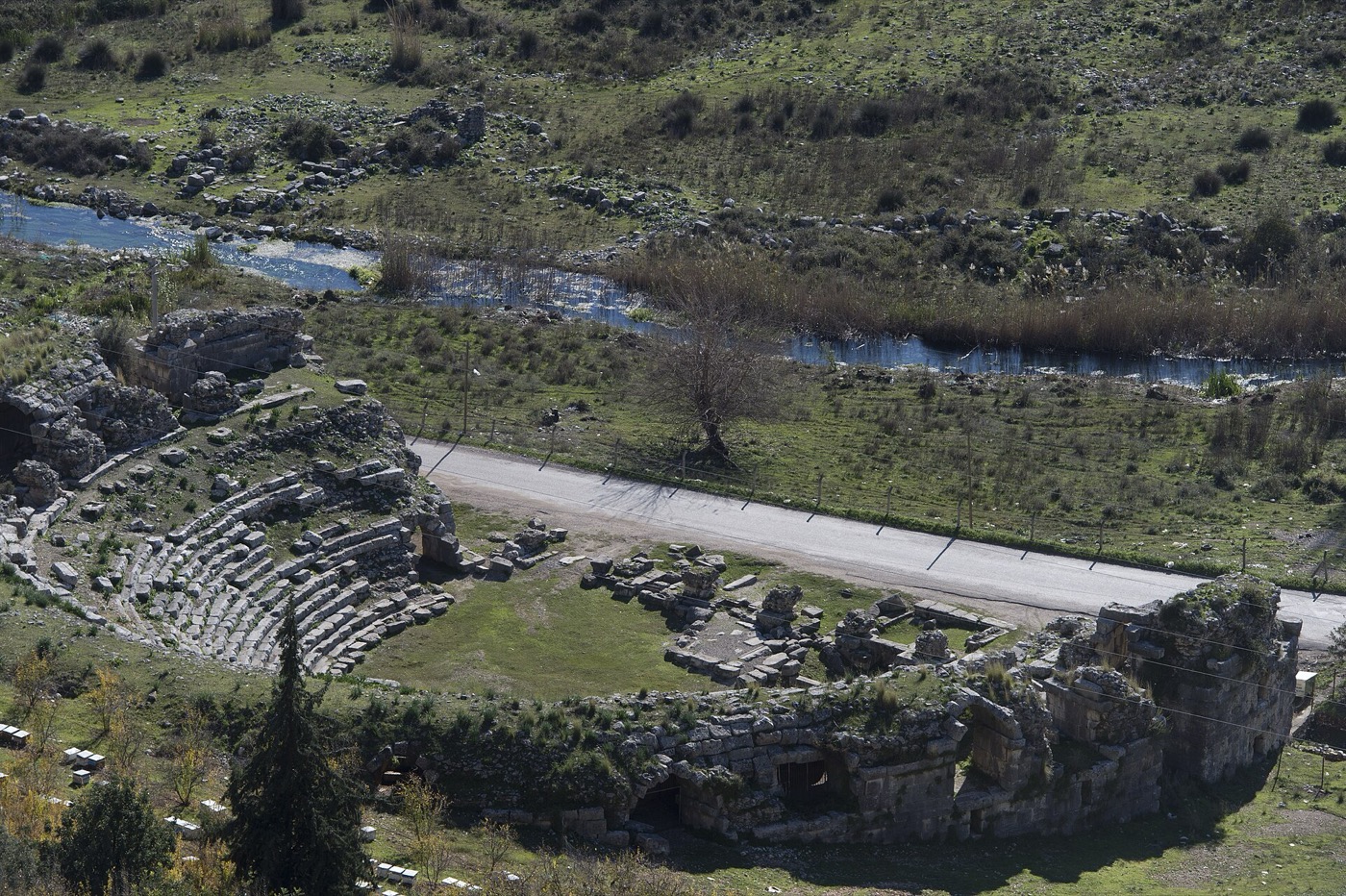
Photo: Dosseman (CC BY-SA 4.0)
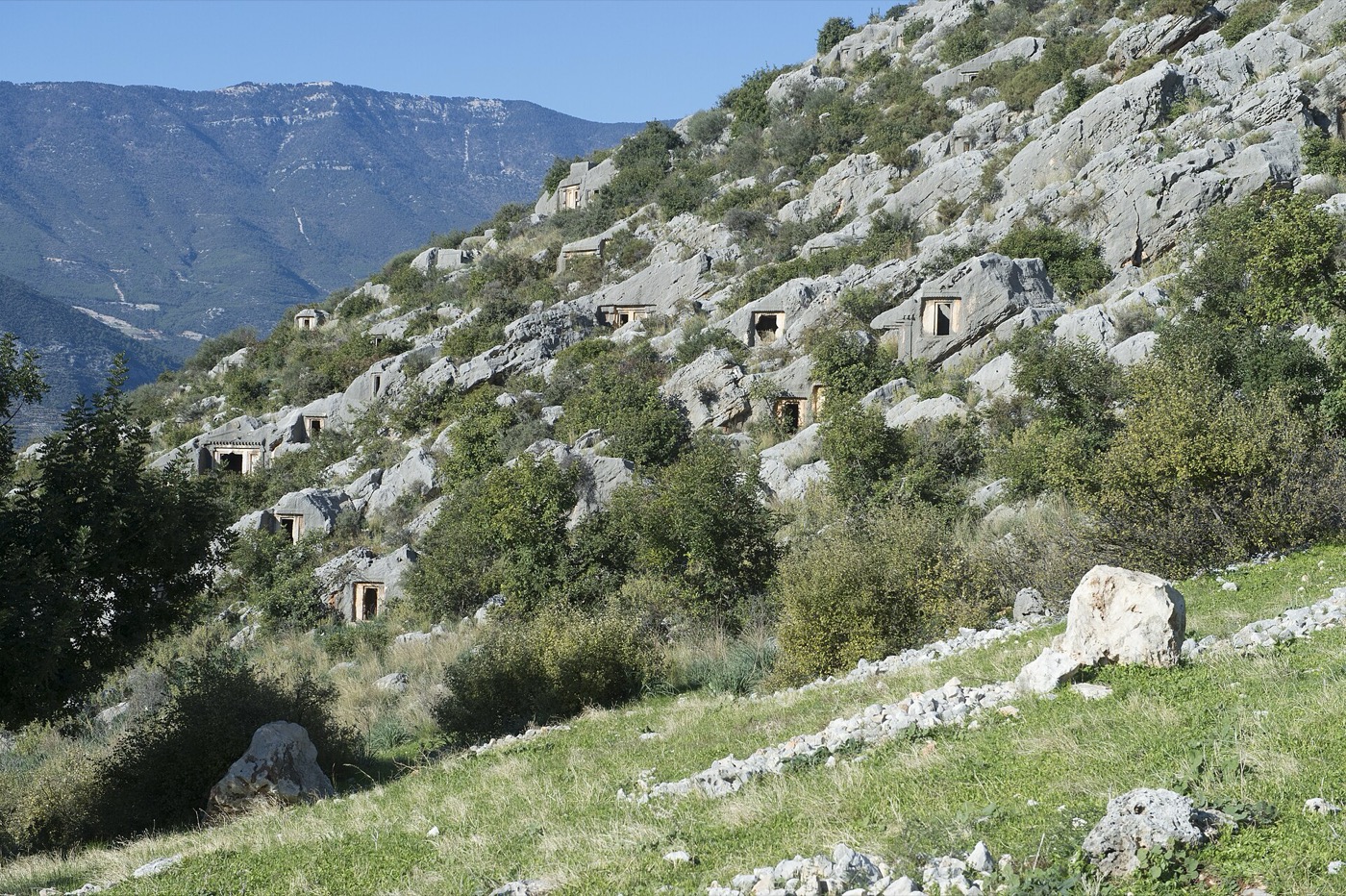
Photo: Dosseman (CC BY-SA 4.0)


Common questions
- How long does a group need at Limyra?
- About an hour. The three main monuments are within 275 m of each other, and the theatre is beside the road.
- Is Limyra difficult to walk?
- The distances are short but spring water runs through the site, so the ground is soft and channels have to be crossed. After rain some of the route is not walkable in ordinary shoes.
- Is Limyra worth including on a Lycian day?
- For a small group or as the quiet contrast to a busy site, yes -- it is nearly empty, so your group actually hears you. It is not the right choice for a group expecting monumental architecture.
- Whose cenotaph is at Limyra?
- Gaius Caesar, the heir of Augustus, who died here. The monument stands among the water channels in the middle of the site.
Related articles
Sources
Facts on this page come from the sources below. Photographs are credited individually.