
Italy headset rules for tour groups in 2026: Milan, Pompeii, Cinque Terre and more
Summarize with AI:ChatGPTClaudePerplexityGrokGoogle AI Mode
We found no national headset rule for tour groups in Italy. Florence and Venice set city-wide rules; elsewhere each museum, church or town writes its own, from three people at Brera to more than 15 at Pompeii. Some accept a group's own system, some point to their own rental sets, and the Last Supper bans professional guiding on free days.
Which Italian sites require headsets for tour groups?
Many sites on a typical Italy itinerary do, each with its own threshold, device wording and group cap. The table compares the rules we checked against each site's own text on 2 October 2026; the texts say "microfonaggio" (microphone system), "radioguide" (radio guides), "whisper" or "auricolari" (earphones).
| Site | Headsets from | Own system | Group cap |
|---|---|---|---|
| Duomo di Milano | 6, guide included | Yes, if not a loudspeaker | 25 plus guide |
| Pinacoteca di Brera, Milan | 3 | Not stated; museum radio guides | 23 plus guide |
| Castello Sforzesco, Milan | More than 10 | Not stated; rental at the bookshop | 25 plus guide |
| Last Supper, Milan | No headset rule; no professional guiding on free days | Not applicable | 40 per 15-minute slot |
| Pompeii | More than 15 | Not stated | 35 |
| Basilica di Aquileia | 7 | Yes; rental available | Not stated |
| Riomaggiore and Manarola | More than 10 | Not stated; earphones required | 25 visitors |
| San Petronio, Bologna | 15 | Must bring own; none provided | Not stated |
| San Francesco, Assisi | Every guided visit | Yes; rental available | 50 |
Our tour group headset rules overview collects these entries with the rules in other countries.

Will Milan's Duomo accept a group's own system?
Yes, with a condition. Groups of at least six, five participants plus a guide, must use a microphone system in the Duomo complex. The July 2025 access rules allow systems rented from the cathedral's Fabbrica or the group's own, provided they are not loudspeakers, and the Fabbrica can check them at the entrance.
Rule 3.3 says groups must "[...] essere dotati dei sistemi di microfonaggio forniti da VFD e/o noleggiati presso il Complesso Monumentale oppure di propri sistemi purché non altoparlanti." In English: be equipped with the microphone systems supplied by the Fabbrica and/or rented at the complex, "or with their own systems, provided they are not loudspeakers."
The Fabbrica can refuse a system it finds unsuitable, and its group FAQ says a system is mandatory in the cathedral and strongly recommended elsewhere. Agree any phone-based system with the Fabbrica in writing before the visit; see the Duomo entry on our overview.
What changed at Pompeii in December 2025?
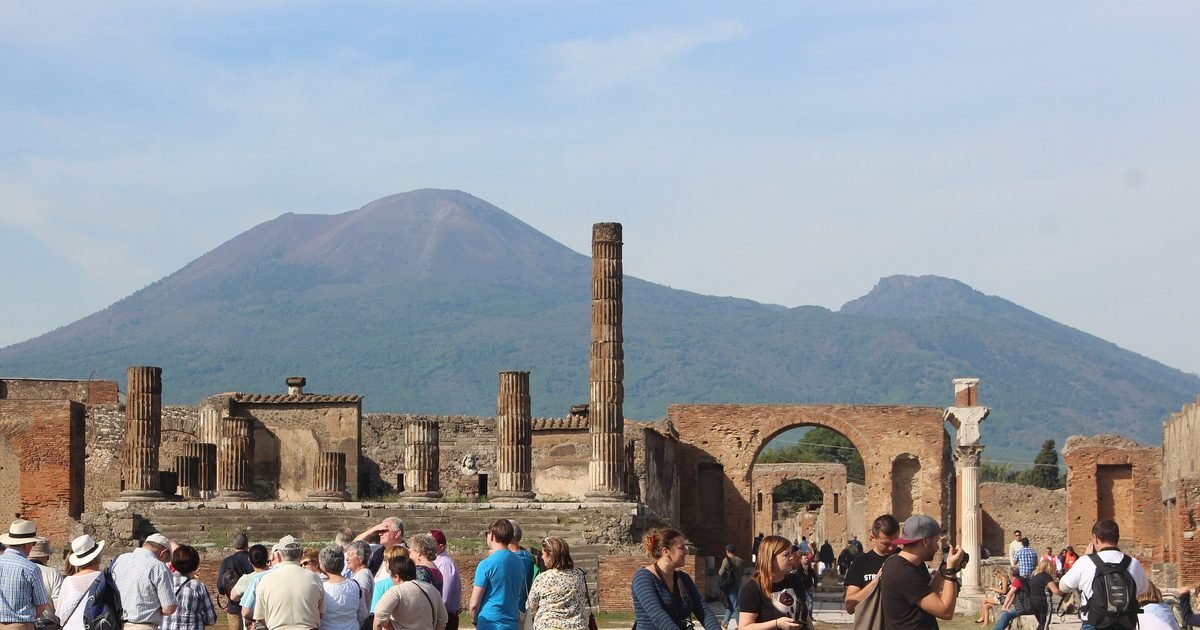
Pompeii adopted a new access regulation by Decree 446 of 23 December 2025, in force from the day after registration. It bars organised groups of more than 35, requires whisper devices and/or earphones above 15, and bans playing radios or other sound devices loudly anywhere in the park.
Article 4.3 says: "In ogni caso, per i gruppi che contino più di 15 persone, è obbligatorio l’utilizzo di dispostivi whisper e/o auricolari." In English: "In any case, for groups of more than 15 people, the use of whisper devices and/or earphones is mandatory."
The text names no supplier, frequency or device brand, and it does not mention phones. Under article 11, staff can remove visitors who break the rules, and group or school leaders can be temporarily barred after repeated breaches.
What does Riomaggiore's 2026 rule mean for Cinque Terre tours?
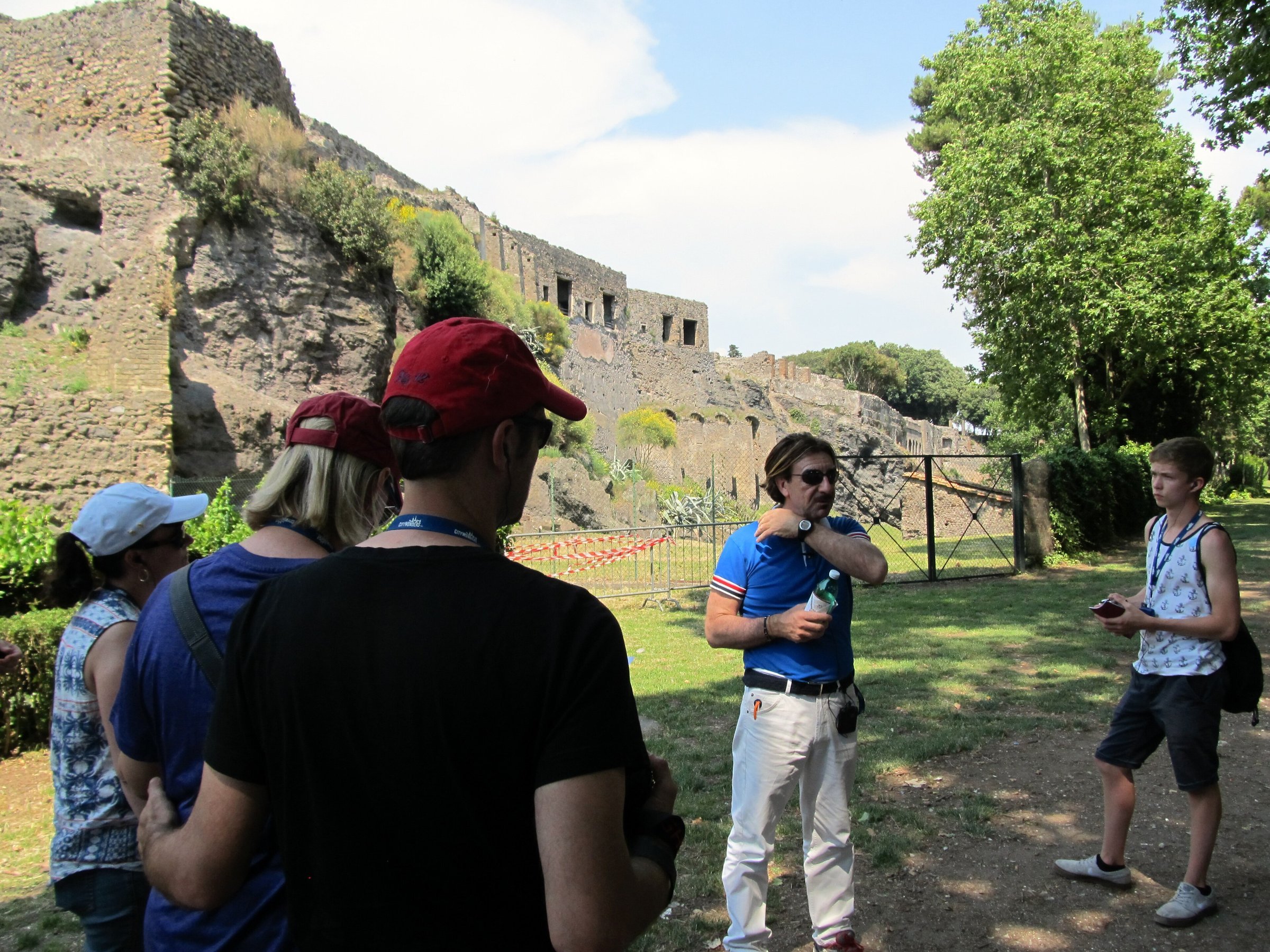
It brings the Venice model to the Cinque Terre. Since 1 April 2026, guided groups of more than ten anywhere in the municipality of Riomaggiore, Manarola included, must listen through earphones. Groups are capped at 25 visitors, the guide not counted, and every voice amplifier other than earphones is banned.
Article 48, paragraph 2.1 of the 2026 police regulation reads: "2.1 Nel caso in cui il gruppo di visitatori sia composto da più di 10 persone è obbligatorio l’uso di auricolari per l’ascolto della spiegazione della visita." In English: "If the group of visitors has more than 10 people, earphones must be used to listen to the explanation of the visit."
Fines run from €25 to €500 (reduced payment €50), and the earphone fine falls on the guide who has not provided earphones. One guide may lead only one group, and groups may not stop where they block foot traffic, especially in tunnels, on stairways and in narrow lanes.
Which sites accept a group's own radio guides?
Four say so in writing. Aquileia admits groups with their own radio guides freely with a booking. Assisi charges €2.50 per person for groups with their own radios and €3.00 to rent (2026 booking page). San Petronio provides none and expects groups of 15 or more to bring theirs, and the Duomo accepts non-loudspeaker systems.
Aquileia's page reads: "I gruppi già provvisti delle proprie radioguide potranno liberamente accedere al complesso basilicale previa prenotazione." In English: "Groups already equipped with their own radio guides may enter the basilica complex freely, with a booking."
Brera points the other way: groups must use the museum's own radio guides, and the Castello Sforzesco rents sets without mentioning own systems. No text mentions phones, so a phone-based system is an option only where the site confirms it in writing.
How should a tour operator plan an Italy itinerary around these rules?
Treat every stop as its own rule. Check each threshold against the real group size, decide which device each stop accepts, and book rental sets where a site points to its own. Pompeii's streets and Riomaggiore's lanes are covered by written rules too.
- List every site's threshold, device wording and group cap against the confirmed group size.
- Budget the museum's radio guides where a site points to its own, as Brera does; elsewhere ask in writing whether phones qualify.
- Split groups above a cap before the day: 25 in Riomaggiore and at the Duomo, 35 at Pompeii.
- Give guides spare earphones with USB-C, Lightning and 3.5 mm plugs, plus power banks for phones and pocket routers.
Frequently asked questions
Is there a national headset law for tour groups in Italy?
Can a guide narrate inside the Last Supper?
Does Brera accept our own whisper system?
What happens at Pompeii if a group breaks the rules?
Try it on your next tour
Where a site accepts the group's own system, and on the walks in between, your guests already carry the hardware. Guides broadcast from the guide app, guests scan a QR code and listen on their own phones and earphones, and agencies manage guides from one panel. See how it works and pricing.
Sources
Official sources
Translations of the Italian rule texts are ours; the Italian originals are authoritative.
Related articles
 Tour operatorsHow do you collect feedback after a tour without chasing people?
 Tour operatorsTour group headset and loudspeaker rule changes: a dated timeline (2026)
 Tour operatorsCan tour guides use whisper systems at UK museums and castles? (2026)
 Tour operatorsWhere French monuments let tour groups bring their own headsets (2026)
 Tour operatorsWhere tour groups cannot use their own headsets or a phone based system (2026)
 Tour operatorsSchool group tours: managing sixty students without losing your voice