
Tour guide loudspeaker bans in Europe's old towns: Barcelona, Bruges, Amsterdam and more (2026)
Summarize with AI:ChatGPTClaudePerplexityGrokGoogle AI Mode
Guides on walking tours in the old towns of Barcelona, Bruges, Amsterdam, San Sebastián and Toledo may no longer use a loudspeaker. Each city bans amplification in the street and caps groups at 15 to 30 people. Most rules say nothing about headsets, yet together the two limits leave a group of 20 on a busy street one workable way to hear the guide: earphones. Each rule below is quoted as the city publishes it.
Which old towns ban loudspeakers on guided walks?
Five cities ban loudspeakers on guided walks today: Barcelona in Ciutat Vella, Bruges, Amsterdam in its Centrum district, San Sebastián and Toledo. Park Güell has its own ban and Valencia has one in draft.
| Place | Group cap | Banned | Since | Penalty |
|---|---|---|---|---|
| Barcelona, Ciutat Vella | 20 people | Loudspeakers | March 2023, to 2028 | Up to EUR 1,500; EUR 3,000 if repeated |
| Barcelona, Park Güell | 30 per narration | Any voice amplifier | Park rules | Not stated |
| Bruges, walks | 20 participants | Any amplification | 1 March 2026 | Fine; licence suspended |
| Bruges, canal boats | Not applicable | Any amplification | 1 January 2029 | Fine; permit suspended |
| Amsterdam, Centrum | 15 participants | Any amplification | 1 April 2020 | Fine; tour stopped |
| San Sebastián | 25 plus the guide | Megaphones, microphones | Current rules | Fine; group sent away |
| Toledo | 30 at three spots | Megaphones, loudspeakers | Announced for 1 January 2026 | Not stated |
Each rule has an entry on our tour group headset rules page, for example Bruges.
What does Barcelona's Ciutat Vella decree say?
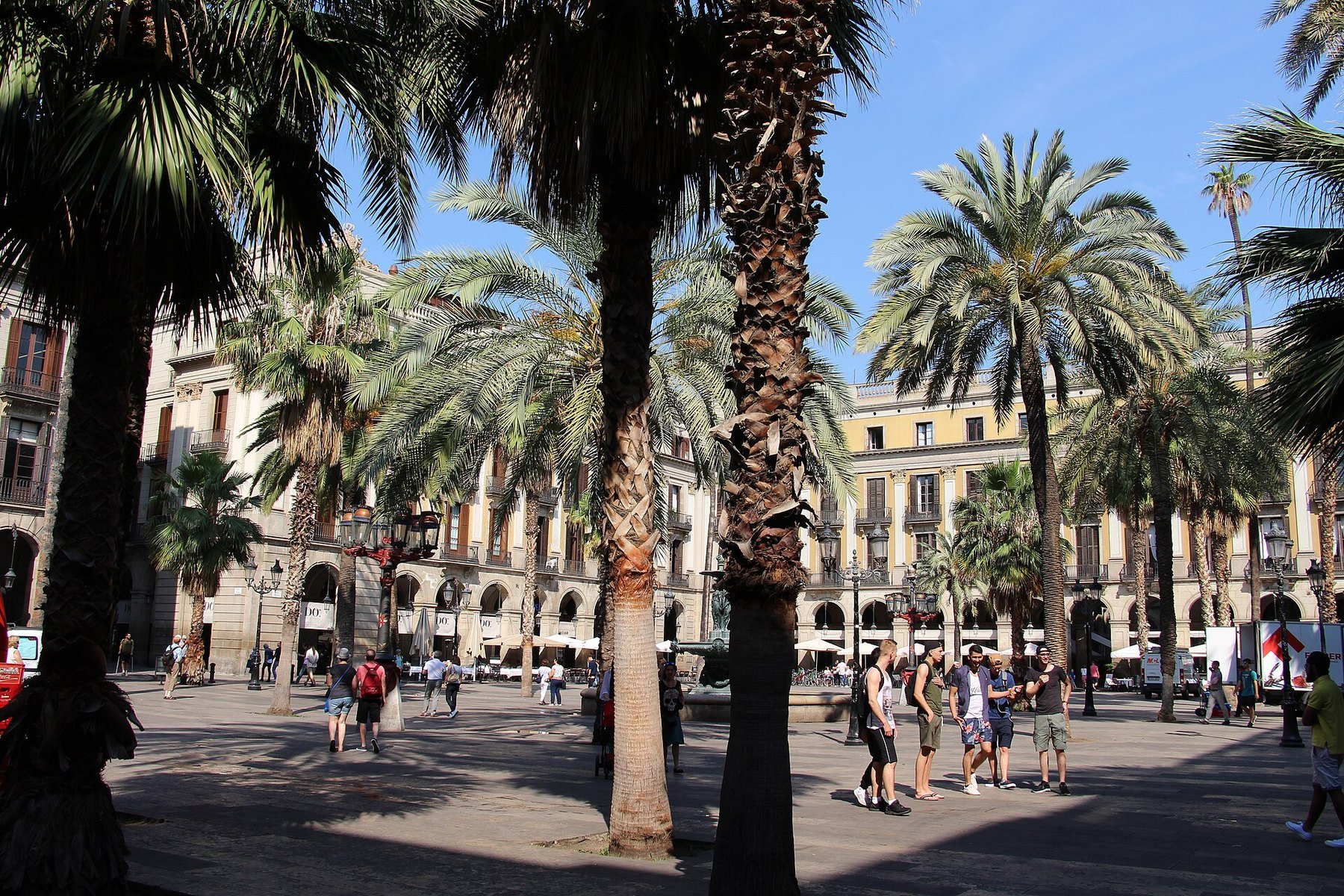
Barcelona's decree caps guided tourist groups in Ciutat Vella at 20 people, limits how many groups may stand in 12 busy squares and streets, and bans loudspeakers. It has applied since March 2023 and now runs to 2028:
“El decret també manté la prohibició de l’ús dels altaveus per a les explicacions, per propiciar l’ús de radioguies en tots els barris, per tal de minimitzar el seu impacte acústic.”
In English: the decree keeps the loudspeaker ban to encourage radio guides in every neighbourhood and cut noise.
Plaça Reial and Plaça Sant Jaume take at most eight groups at a time. In the first half of 2024, civic agents counted 3,828 groups averaging 13 people; about 97% complied, none used an amplifier, and more guides were choosing earphones.
Inside Park Güell, which has its own amplifier ban, the park recommends individual radio guides.
Why did Bruges drop its headset rule in 2026?
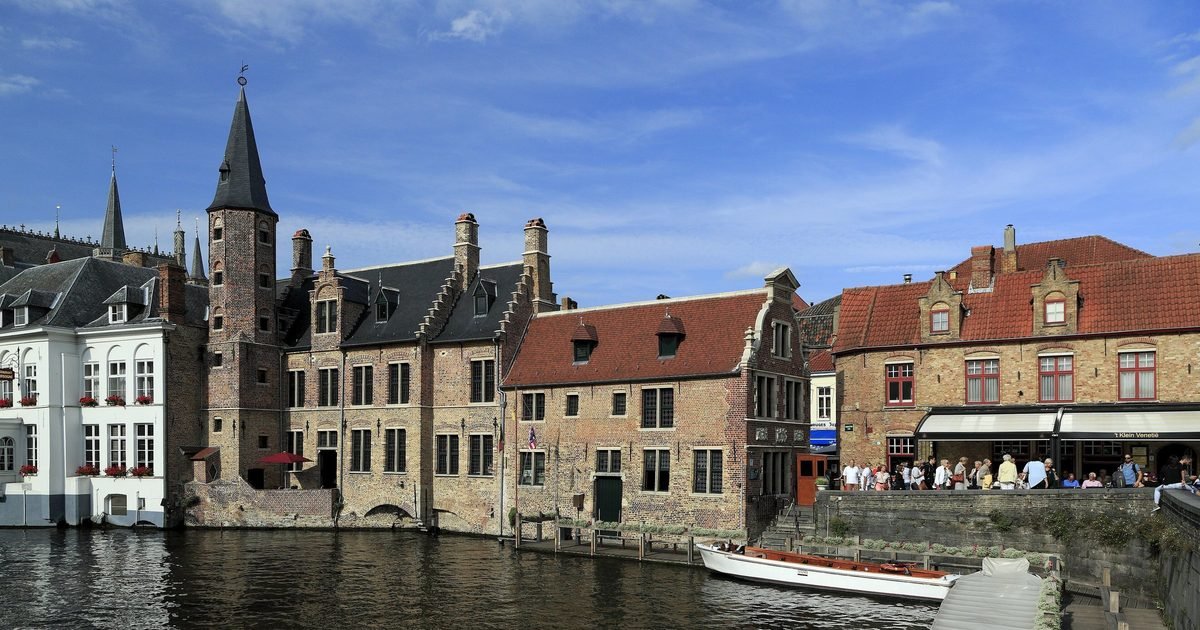
Bruges replaced it with a smaller cap. The 2017 by-law, amended in 2019, required an audio system with earphones for groups of 25 or more. Since 1 March 2026 every organised walk is capped at 20 participants and amplification is banned outright. Article 5.8:
“De begeleider van een toeristische wandeling mag geen lawaaihinder veroorzaken. Het gebruik van geluidsversterking is verboden.”
In English: the guide may not cause noise nuisance, and sound amplification is prohibited.
Groups may not stop in streets such as Stoofstraat, in the Begijnhof or near the boat kiosks.
Canal boats follow: “Met ingang van 1 januari 2029 is het gebruik van geluidsversterking verboden.” From 1 January 2029 amplification is banned on board and the commentary must come through a system only passengers can hear. The ordinance, adopted on 29 June 2026, names no system type.
Inside four Musea Brugge museums, including the Groeningemuseum, outside guides need prior written permission to lead a tour at all.
How do Amsterdam, San Sebastián and Toledo compare?
Amsterdam has the smallest cap, San Sebastián the strictest device wording and Toledo the newest ordinance. Only San Sebastián says what to use instead of a loudspeaker.
Amsterdam. Since 1 April 2020, tours of 5 to 15 participants in Centrum need an exemption: “Groepen bestaan uit maximaal 15 deelnemers. [...] Geluidsversterking is niet toegestaan.” Groups have at most 15 participants and amplification is not allowed. A breach means a fine and an immediate end to the tour.
San Sebastián. The guide decalogue lists as mandatory: “Para evitar exceso de ruidos en la calle es necesario utilizar sistemas de audio individualizados. Está prohibida la utilización de megáfonos, micrófonos, etc.” Individual audio systems are required; megaphones and microphones are banned. Groups may have 25 people plus the guide.
Toledo. The city announced its ordinance for 1 January 2026: no megaphones or loudspeakers, and 30 people at most at calle Hombre de Palo, Plaza del Consistorio and Pasaje Balaguer. In May 2026 it described the ban as in place.
Valencia. A draft discussed with guides on 24 September 2026 would cap groups at 25, or 20 in Ciutat Vella, ban loudspeakers and require “sistemas de audio individualizados”. It is not law yet.
Does a loudspeaker ban mean the group needs headsets?
In law, only San Sebastián says so. In practice, 15 to 30 people on a narrow street cannot follow an unamplified voice for long, and raising your voice counts as noise nuisance in Bruges and Amsterdam. The realistic choice is rented receivers or the guests' own phones with earphones.
No text names a device type or mentions phone-based systems. San Sebastián's ban on microphones means amplified ones in context, though the word is not defined.
Your Next Tours is one option. The guide speaks into their phone, guests scan a QR code and listen in their phone's browser through their own earphones, and nothing is rented. A portable WiFi router carries the broadcast, so no internet is needed during the tour. A phone playing through its speaker would break every rule above, so earphones are a must. Ask the city in writing whether a system meets its rule.
Indoors the rules change again; see what museums restrict.
What should guides and operators check before the next walking tour?
- Check each city's group cap and split larger groups. Amsterdam counts participants; San Sebastián allows 25 plus the guide.
- Leave portable speakers and megaphones behind, even for short stops.
- Complete the paperwork: the Amsterdam exemption, the San Sebastián declaration, the Bruges licence and badge.
- Plan stops away from restricted spots such as the Bruges no-stop streets and Barcelona's capped squares.
- If guests use their own phones, ask them to bring earphones and carry spare wired pairs.
- Keep the city's written answer with your tour documents.
Frequently asked questions
Can I use a small speaker if I keep the volume low?
Do these rules apply to school groups?
Is the Bruges headset rule for groups of 25 still in force?
What happens if a group is too large?
Try it on your next tour
Your guests already carry the receiver. Install the guide app, create a tour and share its QR code at the first stop: guests listen on their own phones and earphones while you talk at room volume. See how the broadcast works and what renting receivers costs.
Sources
Official sources
Translations of the rule texts are ours; the original wording is authoritative.
Related articles
 GuidesQuiet guiding in China and Japan: loudspeaker bans from the Forbidden City to Kyoto's temples (2026)
 GuidesHow long should a group spend at an archaeological site?
 GuidesUS walking tour rules on loudspeakers and group size: Savannah, Charleston, New Orleans and Salem (2026)
 GuidesGroup audio rules at the Rijksmuseum, Van Gogh Museum and other Amsterdam sites (2026)
 GuidesSintra's palaces require radio guides for more than ten visitors per guide, and you bring your own (2026)
 GuidesWhich Madrid museums let groups bring their own headsets? Prado, Reina Sofía and Thyssen (2026)