
How many receivers does a 40-person tour need? Possibly none

Summarize with AI:ChatGPTClaudePerplexityGrokGoogle AI Mode
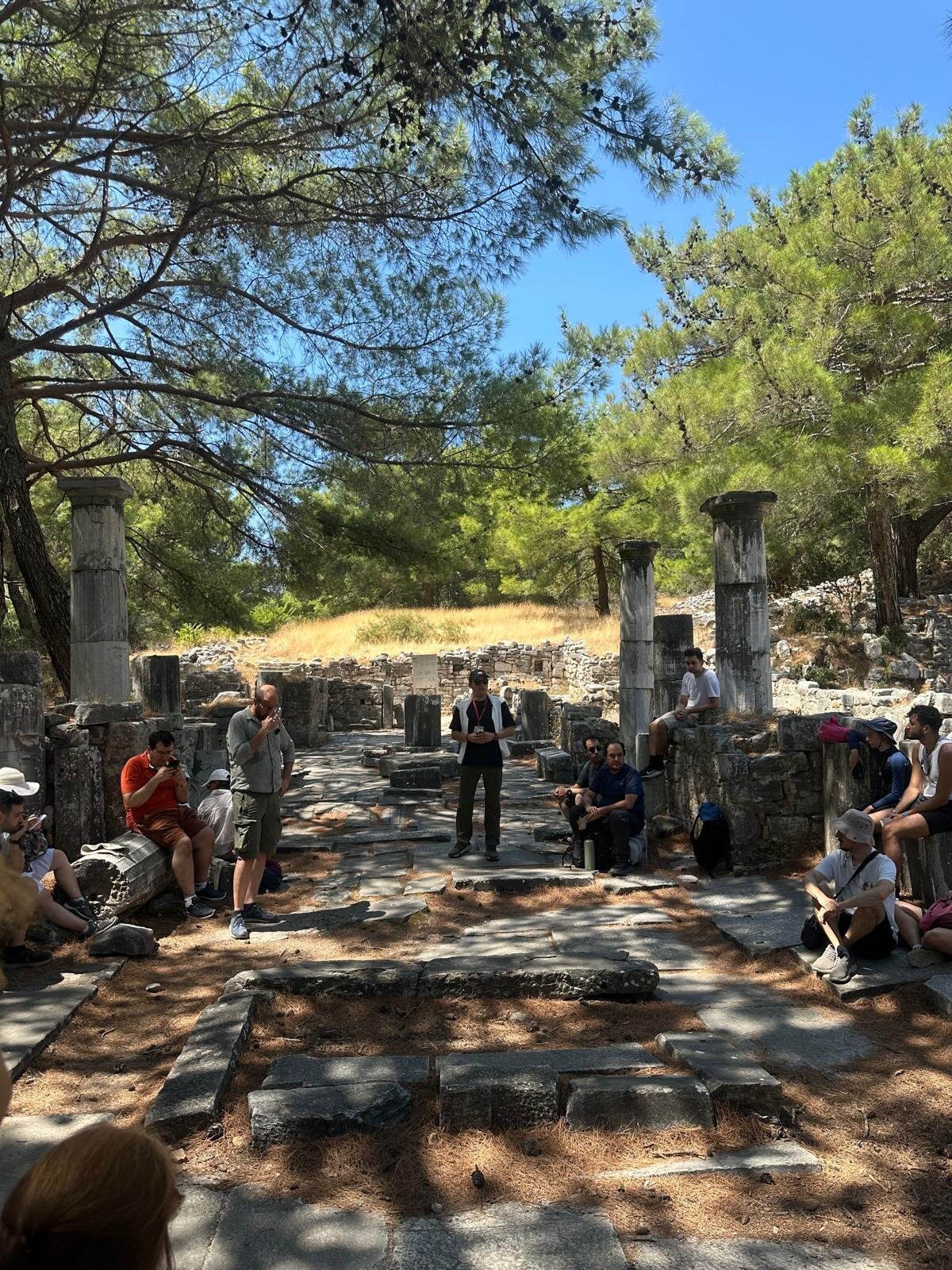
If you are asking how many receivers a 40-person tour needs, the honest answer is that it depends on whether you are handing out receivers at all. On our first open-air field test we ran a roughly 40-person tour and handed out none, because every participant was already carrying a device capable of receiving audio.
That changes what you have to count. Not units, and not people.
What happened on a 40-person tour with no receivers?
The tour was organised by someone else and we were guests on it. Participants joined by scanning a QR code and listened through their own phones on a local WiFi network, with no internet at the site at all.
The practical effect was not that we saved on rental. It was that the group stopped crowding towards the guide. Once everyone could hear in their own ear, people stood where they could see rather than where they could hear, and the usable group radius went from a few metres to the width of the area.
So what is the actual ceiling?
Your portable router, not a receiver count. The app sets no fixed listener limit on the local network; the limit is how many clients your router will hold and how well it covers the area you are standing in.
The largest number of simultaneous listeners we have measured in a production session is 29. It comes from a 36-person city tour in Ankara in September 2026, and it is a measurement, not a limit.
| What you check | Renting receivers | Listening on own phones |
|---|---|---|
| Unit count | Ordered in advance, fixed | Not applicable |
| Late group change | Re-order or go short | No effect |
| Distribution | Every stop, both directions | None |
| Charging | Yours, overnight, all units | Participant's own phone |
| Hygiene | Covers or cleaning per group | Own headphones |
| Real constraint | Minimum order quantity | Router coverage |
What should you count instead?
Three things, in this order.
- Phones. Effectively all of them, on every adult tour we have run.
- Headphones. This is the real gap, and it is the only number worth collecting in advance.
- Battery. A participant at 6 percent at the start of a three-hour tour is your problem before the tour begins, not during it.
- Router coverage for the area, which matters more than the participant count.
- A handful of spare cheap earbuds, sized to the headphone gap rather than the group.
What about participants without headphones?
They are the honest weak point, and the number is small. In practice most adults on a tour carry something; the ones who do not can hold the phone at low volume close to the ear, which works in a quiet site and not in wind.
Carrying a few spare pairs covers it. The point is that you are buying five or ten pairs of cheap earbuds, not renting forty receivers, and the spares stay with you between tours instead of going back in a courier bag.
Frequently asked questions
How many receivers does a 40-person tour need?
How many people can listen at the same time?
What happens to participants who have no headphones?
Does a bigger group need a bigger router?
Do participants need internet at the site?
Stop counting receivers
Your Next Tours runs the audio from the guide's phone over a local network, so group size stops being a purchasing decision. The Gobeklitepe field test has the full account of the tour described here.
Once you know how many receivers you need, the next question is what they cost: the published tariff and the per-person day maths are on the rental cost page.
Related articles
 Tour operatorsWhat a tour audio system rental actually costs in 2026
 Tour operatorsHow do you collect feedback after a tour without chasing people?
 Tour operatorsTour group headset and loudspeaker rule changes: a dated timeline (2026)
 Tour operatorsCan tour guides use whisper systems at UK museums and castles? (2026)
 Tour operatorsWhere French monuments let tour groups bring their own headsets (2026)
 Tour operatorsItaly headset rules for tour groups in 2026: Milan, Pompeii, Cinque Terre and more