
Whisper radio systems and the phones already in your group's pockets
Summarize with AI:ChatGPTClaudePerplexityGrokGoogle AI Mode
Both categories solve the same problem: one voice reaching a whole group without shouting. A whisper radio system does it with a transmitter and a receiver for every participant. A phone-based system does it over a local network, using the phone each participant already carries.
This is a category comparison, not a brand review. The differences that matter are operational, and they show up in the same four places every day.
Where do the two actually differ?
Not in whether the group can hear you. Both work. They differ in what you carry, what you hand out, and what you do afterwards.
| Whisper radio system | Phone-based | |
|---|---|---|
| Device per participant | Receiver you supply | Phone they already carry |
| Distribution | Every tour, both directions | None |
| Charging | All units, overnight, yours | Participant's own phone |
| Hygiene | Covers or cleaning per group | Their own headphones |
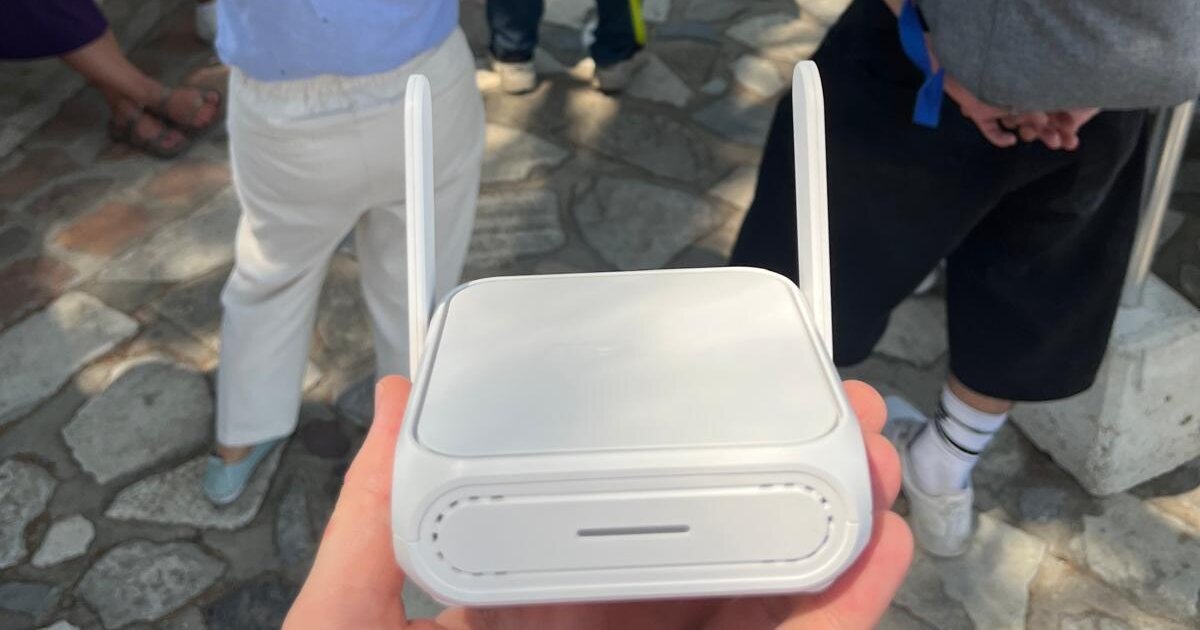
| What you carry | Transmitter, receivers, spares, chargers | Router and a power bank |
| Cost shape | Scales with group size | Flat, scales with tours not people |
| Participant setup | Hand them a unit | Scan a code, enter a name |
What does the change look like on a tour day?
The steps disappear rather than get faster.
- Before the tour: charge and count units, or charge one power bank.
- At the meeting point: hand out receivers and headphones, or show a QR code.
- Mid-tour when someone joins late: find a spare unit, or point at the code again.
- At the end: collect every unit and check the count, or nothing.
- That evening: clean headphones and recharge, or nothing.
When is a radio system still the right answer?
Three cases, and they are real.
Participants who may not carry a smartphone. School groups below a certain age, some senior groups, and any tour where phones are collected or discouraged. If you cannot rely on the device being in the pocket, handing one over is the only certain route.
You were going to supply headphones anyway. If your operation already provides and cleans headphones for every guest, the hygiene argument against radio mostly disappears, because you are doing that work either way.
No willingness to manage a network. A radio system has no network to configure. A phone-based system needs a router switched on and a group joined to it, which is a small task but not a zero task.
What does the cost curve look like?
This is the difference that compounds. A per-receiver cost, whether rented or owned, scales with every additional participant and every additional tour day. A router and a subscription do not: the same equipment serves a group of ten and a group of forty.
The phone-based system has no fixed listener limit on the local network: the ceiling is set by the router you carry, not by a number of units you bought. On the largest tour we have measured, 29 people listened at the same time from one guide phone. That is the structural difference, and it is why the comparison changes as group sizes grow.
Frequently asked questions
Is a whisper radio system better quality than phone audio?
What is the strongest argument for keeping a radio system?
Do participants need to install an app?
What replaces the receivers you no longer carry?
Does either system work without internet?
Compare it against your current setup
If you already rent or own receivers, the useful exercise is to price one representative tour both ways: ask the rental firm to itemise the per-day rate, the minimum quantity, the minimum rental period, the deposit and the courier legs for that exact tour, then compare the total against a season of router and subscription.
If you want to compare the two in numbers, the published rental tariff and the break-even point against buying are on the rental cost page.
Related articles
 Tour operatorsCan you run a museum tour without renting the headset set?
 Tour operatorsShared headphones on tours: the operational cost nobody quotes
 Tour operatorsHow many receivers does a 40-person tour need? Possibly none
 Tour operatorsWhat a tour audio system rental actually costs in 2026
 Tour operatorsHow do you collect feedback after a tour without chasing people?
 Tour operatorsTour group headset and loudspeaker rule changes: a dated timeline (2026)