Çatalhöyük
Nine thousand years old and almost nothing to look at. This is the site where the narration is the entire visit, and where a group that cannot hear you has seen nothing at all.
- Location
- Çumra, Konya
- Type
- Ancient city
- Typical visit
- 1 h 15 min
- Walking time
- 1 h 15 min
- UNESCO
- World Heritage List, 2012
- Coordinates
- 37.6668, 32.8252
Summarize with AI:ChatGPTClaudePerplexityGrokGoogle AI Mode
Çatalhöyük was inscribed on the UNESCO World Heritage List in 2012 as a Neolithic settlement, out on the Konya plain about 40 km southeast of the city. It was identified by James Mellaart in 1958 and first excavated in the 1960s.
People lived here for well over a thousand years in mud-brick houses packed wall to wall, with no streets between them. You entered through a hole in the roof and walked across the rooftops of your neighbours to get home. Under the floors of those houses, the dead were buried.
There is almost nothing to see, and that is the point
What stands is low mud-brick wall under two large shelters. There are no columns, no theatre, no facade. A group arriving from Ephesus or Pergamon will register this as a step down unless you have prepared them.
That makes Çatalhöyük the site where narration carries the entire load. Everywhere else the stones do part of the work; here they do almost none. If the back half of your group cannot follow what you are saying under the shelter, they have not had a visit -- they have looked at a pit.
The layout is short and the order matters
The visitor centre and the reconstructed house sit at the north end. From there it is about 160 m to the north shelter and a further 240 m to the south shelter, which holds the main excavation section.
Start at the reconstructed house. It is the only place on site where a Neolithic interior is legible as a room -- painted walls, a platform, the roof entrance -- and once the group has stood inside one, the wall stubs under the shelters stop being rubble and become floor plans. Doing it the other way round wastes the excavation.
Practical notes
- Inscribed by UNESCO in 2012 as the Neolithic Site of Çatalhöyük.
- Two roofed excavation areas plus a visitor centre and a full-size reconstructed house.
- As listed by the Ministry on 6 October 2026, the north shelter is temporarily closed to visitors.
- The whole walk is about 400 m end to end; the ground is flat.
- The shelters are clad barrel vaults open at the ends -- shade and reflected sound, but the wind still comes through.
- The best-known finds, including the seated female figurine, are in the Museum of Anatolian Civilizations in Ankara.
Walking order
The order we use, with the time each stop takes at a normal group pace.
Visitor centre and the reconstructed house
The orientation exhibit and a full-size Neolithic house you can walk into.
North shelter
The smaller of the two roofed excavation areas. As listed by the Ministry on 6 October 2026, it is temporarily closed to visitors.
South shelter
The main excavation section, where the stacked houses are readable.
3 stops · 1 h 15 min

37.6668, 32.8252
Coordinates are for orientation, not for navigation.
Map data © OpenStreetMap contributors.
Notes for guides
What a guide needs to know before standing in front of a group here. Written from our own field work; where we have not verified something, it is not listed.
- RouteVisitor centre and reconstructed house first, then the shelters. Standing inside a reconstructed room is what makes the wall stubs readable; in the other order the excavation is wasted on the group.
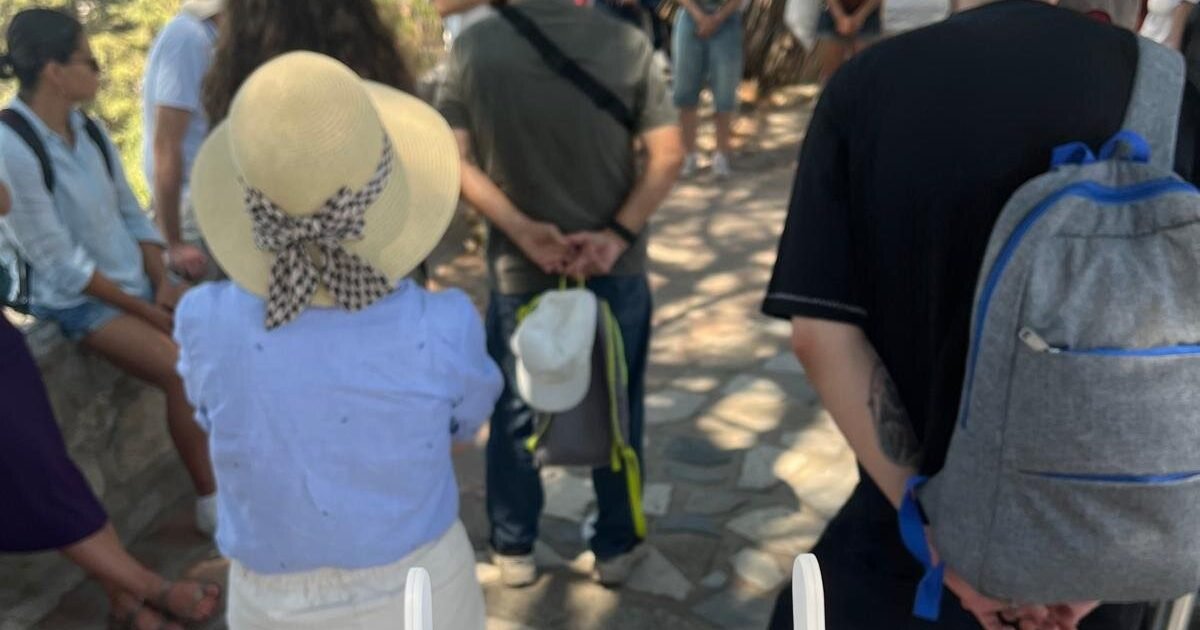
- Being heardThe shelters are clad barrel vaults, open at the ends. They give shade and hard surfaces that reflect your voice, but the plain wind still comes through, and this is the site where being unheard costs the most.
- CrowdsThe viewing platforms above the excavation are narrow. A group of any size sees the section in shifts, so plan what you say while half of them are waiting.
- TimingSeventy-five minutes covers all three stops. There is no shade on the walk between shelters and the plain gets very hot in summer.
- TipWarn the group before arrival that there is little standing architecture. A visit sold as ruins disappoints; a visit sold as the oldest town anyone has dug does not.
Photographs
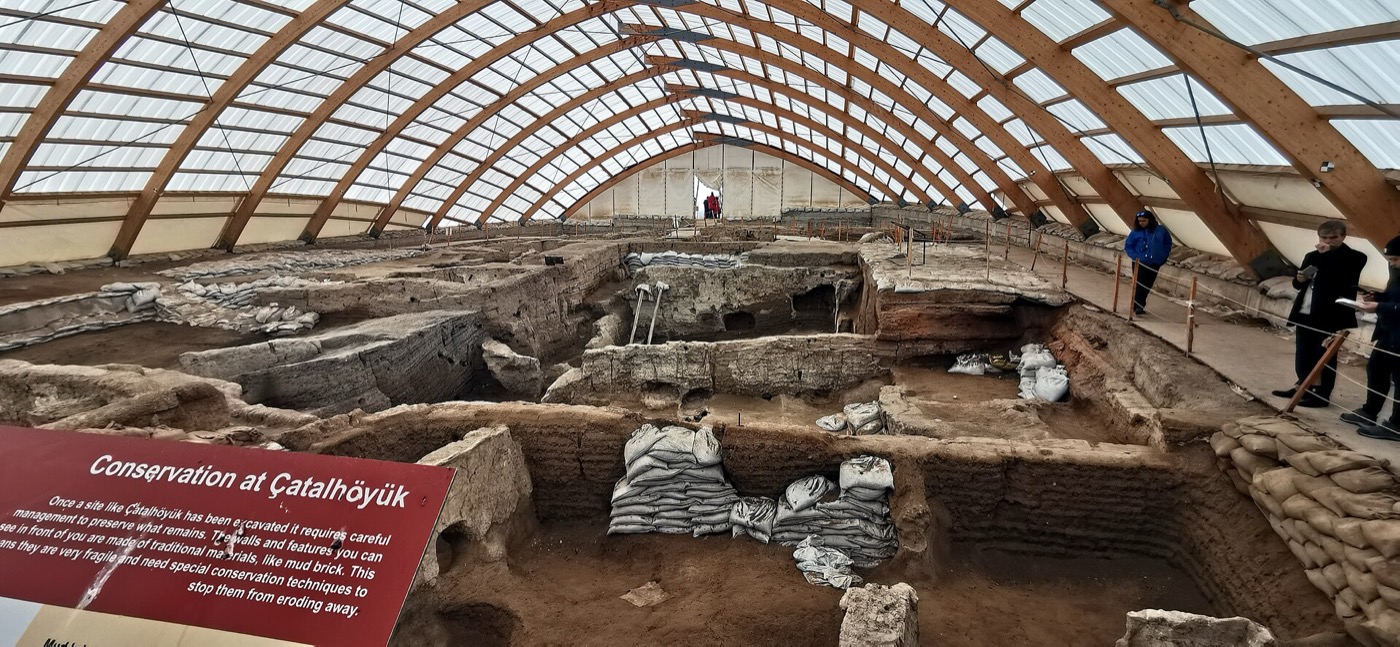
Photo: Murat Özsoy 1958 (CC BY-SA 4.0)
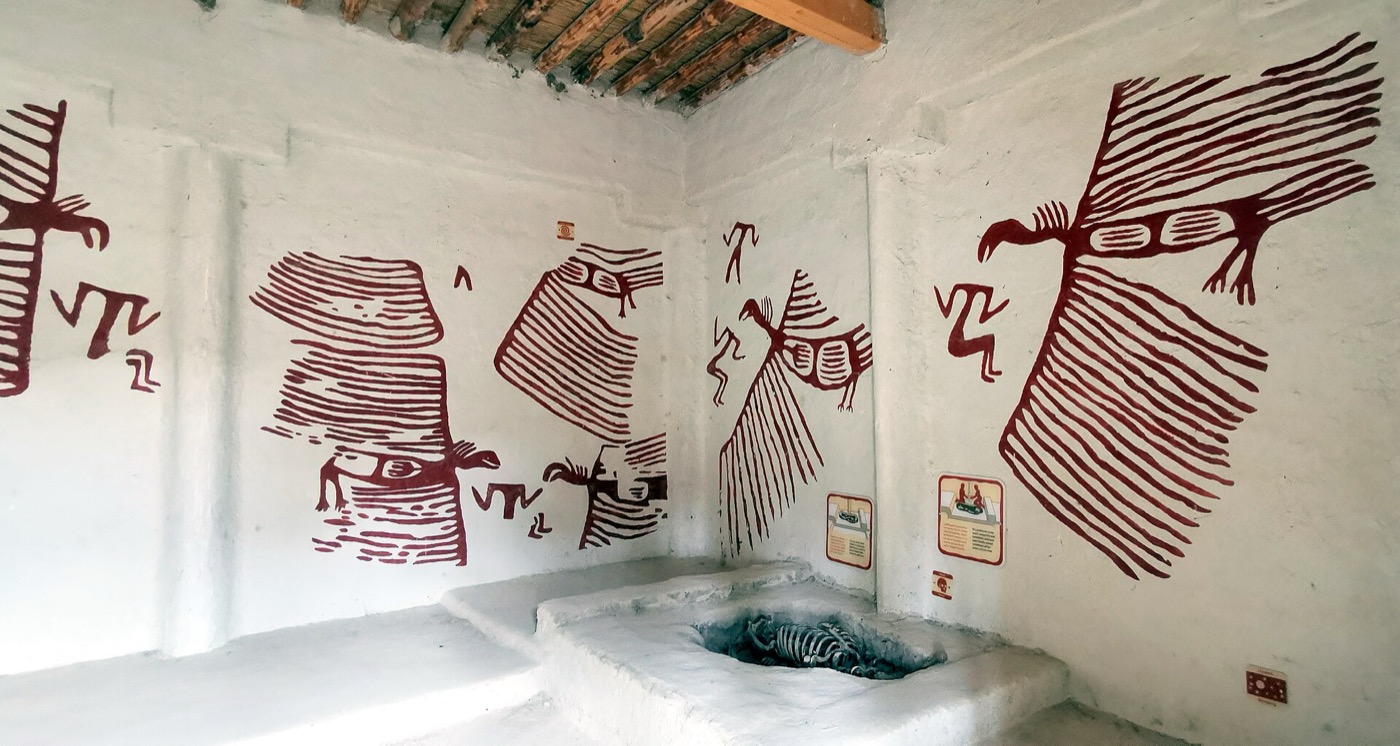
Photo: Murat Özsoy 1958 (CC BY-SA 4.0)


Common questions
- How long does a group need at Çatalhöyük?
- About seventy-five minutes for the visitor centre, the reconstructed house and both shelters. The whole walk is roughly 400 m on flat ground. As listed by the Ministry on 6 October 2026, the north shelter is temporarily closed to visitors.
- What is there to see at Çatalhöyük?
- Low mud-brick walls under two shelters, a visitor centre, and a full-size reconstructed Neolithic house. There is no standing monumental architecture, which is why the narration matters more here than at almost any other site.
- In what order should a group see it?
- The reconstructed house first. Once people have stood inside a Neolithic room, the wall stubs under the shelters read as floor plans instead of rubble.
- Where are the famous Çatalhöyük finds?
- The best-known objects, including the seated female figurine, are in the Museum of Anatolian Civilizations in Ankara rather than on site.
Related articles
Sources
Facts on this page come from the sources below. Photographs are credited individually.
- UNESCO World Heritage List, Neolithic Site of Çatalhöyük (2012)whc.unesco.org
- Wikidata Q192522wikidata.org
- OpenStreetMap, Çatalhöyük (durak koordinatlari)openstreetmap.org
- T.C. Kültür ve Turizm Bakanlığı, Çatalhöyük Örenyeri (kuzey korugan geçici olarak kapalı; durum 6 Ekim 2026'da kontrol edildi)muze.gov.tr