Third field test in Ankara: a 36-person city tour, offline and online in one day
Summarize with AI:ChatGPTClaudePerplexityGrokGoogle AI Mode
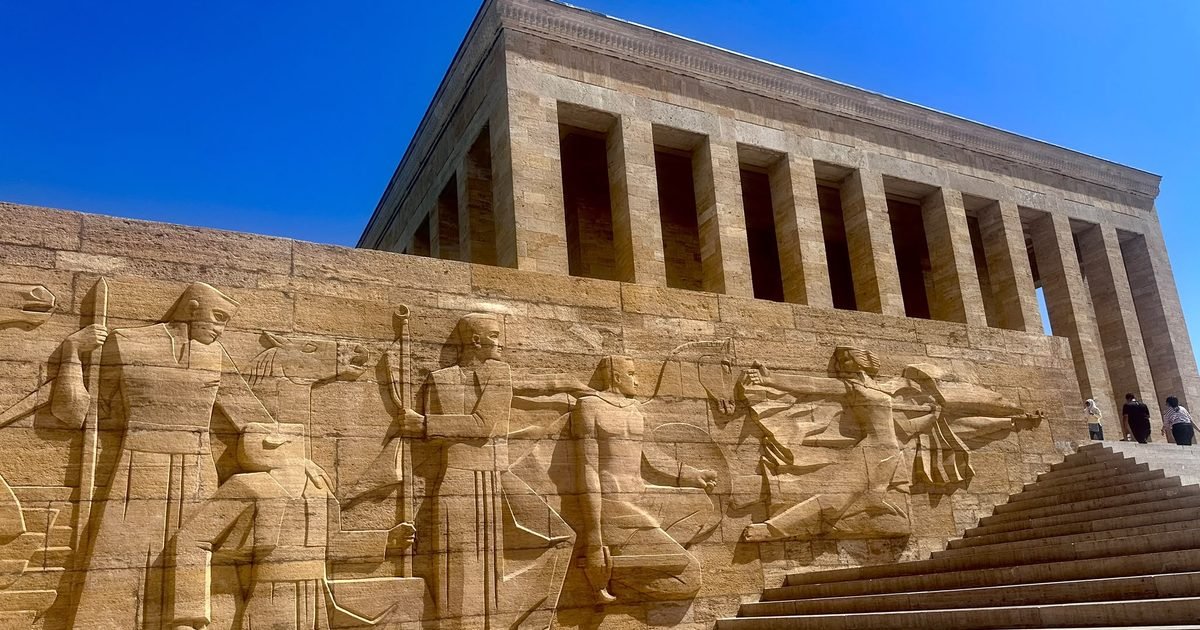
Your Next Tours ran its third field test in Ankara on 13 September 2026, on a one-day walk through the city where the Republic was founded. We did not organise this tour either. We were guests of the Evrim Ağacı Ankara team and the travel agency Keşfet101 on their Cumhuriyet Ankara'sı Gezisi, a 36-person group that started at Anıtkabir and ended on Atatürk Bulvarı.
The first field test at Göbeklitepe and Karahantepe tested offline broadcast at a single site. The second, on the Aegean coast, put both broadcast modes in front of three days of changing itinerary. Ankara asked a narrower question we had not been able to ask before: what happens when mobile coverage fails and then recovers inside a single day, a few kilometres apart?
What did the third field test set out to check?
Whether a guide can change broadcast mode inside a single day without the group noticing the change. The first two tests chose a mode per tour. Ankara chose one per stop, because the coverage did, and that is a different demand on both the product and the guide.
- Two modes on one tour, chosen by the ground. Offline broadcast where mobile data was not usable, online broadcast where it was.
- A city itinerary instead of an excavation site. Traffic, other visitors, indoor museum rooms and a long boulevard, all in the same day.
- A 36-person group. Large enough to spread out across a site, which is exactly the size at which an unaided voice stops reaching the back.
Where did the signal run out, and what did we do about it?
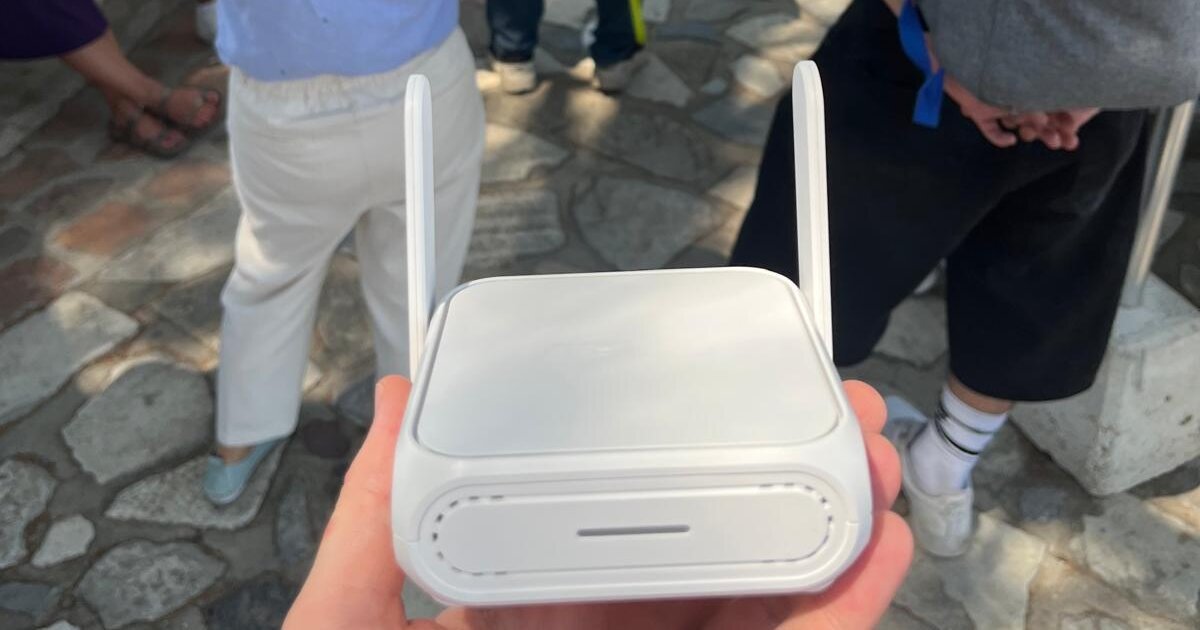
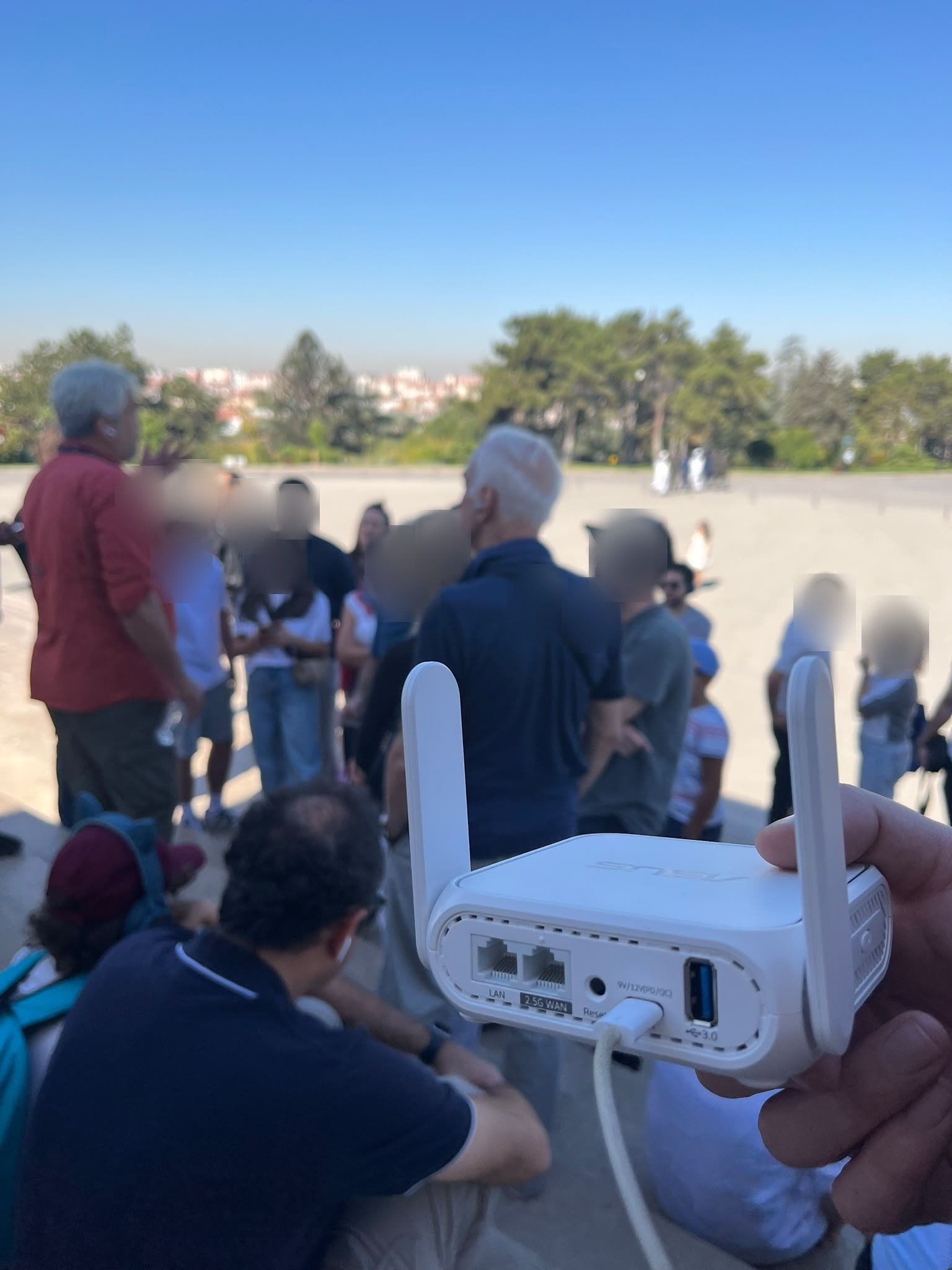
Around Anıtkabir, and we ran the broadcast offline there. Offline mode keeps the audio on a local WiFi network created by a portable router, so it does not touch mobile data at all. At the two Assembly buildings coverage was dependable and the broadcast ran online.
| Stop | Broadcast mode | Why |
|---|---|---|
| Anıtkabir | Offline, on a local WiFi network | Mobile data was little to none across the grounds |
| First Grand National Assembly building | Online, over the internet | Mobile coverage was dependable |
| Second Grand National Assembly building | Online, over the internet | Mobile coverage was dependable |
The two modes are not interchangeable. Online broadcast carries the guide audio over the internet through Your Next Tours servers, so a listener does not have to be standing with the group, and live translation is available in that mode. Offline broadcast keeps everything on the guide's local network, needs no internet at all, and does not offer translation. Neither is the better mode in general. The right one depends on what the ground gives you.
The only extra equipment is the router itself. On this tour it was an Asus RT-BE58 GO, the same travel router we carried on the Aegean coast.
What does listening on earphones change at Anıtkabir?
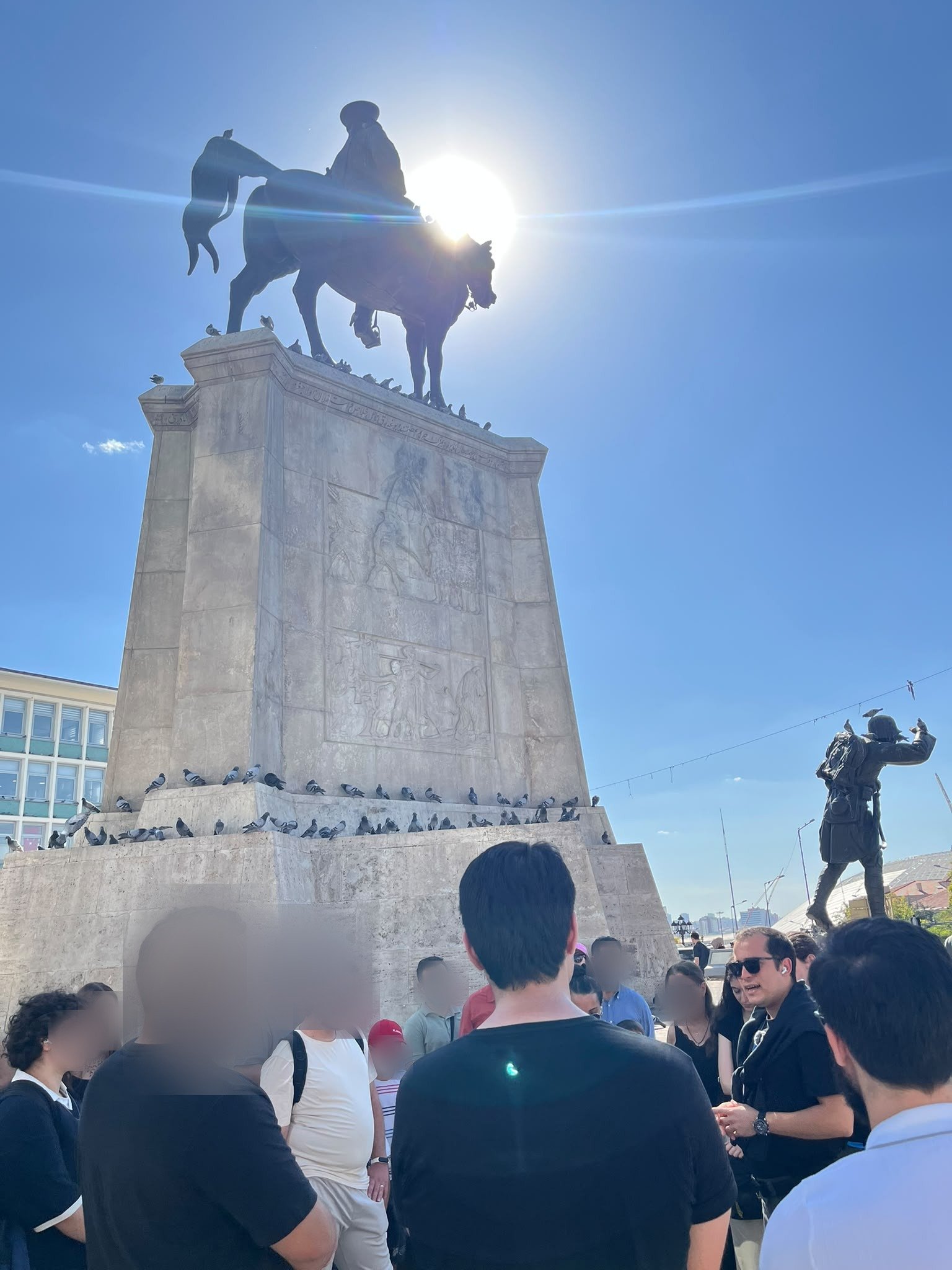
It lets the guide speak in a normal voice. Anıtkabir is the resting place of Gazi Mustafa Kemal Atatürk, and visitors there lower their voices without being asked. A guide addressing thirty-six people outdoors does not have that option unaided: either the voice goes up, or the group presses in around the guide.
With the broadcast running, neither had to happen. The guide spoke at conversational volume, and the group could spread out instead of crowding in to hear.
Offline mode mattered here for a reason it did not at an excavation site: this is the middle of Ankara, and mobile data was not usable. We are not going to guess why. What we can report is what we saw on the day. Around Anıtkabir the group's phones had little to no mobile data, and a few kilometres away, at the Assembly buildings, they had plenty.
What changed at the Assembly buildings?
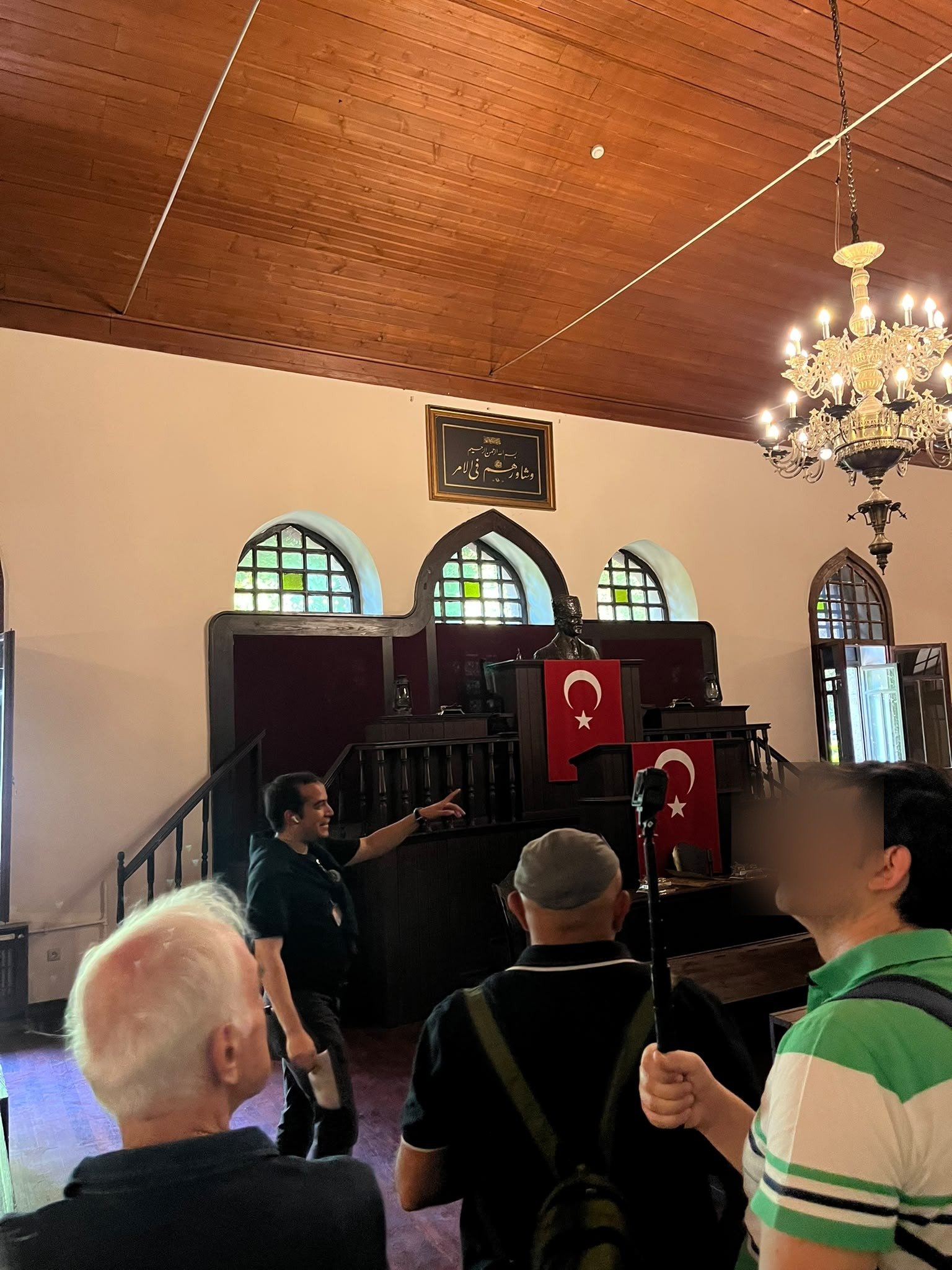
The rooms did. The First and Second Grand National Assembly buildings are museums today, the War of Independence Museum and the Republic Museum, and indoor rooms are a harder acoustic problem than open ground: sound bounces off hard surfaces, and visitors normally have to crowd around the guide to hear anything.
Mobile coverage was dependable here, so the broadcast ran online. That is the mode's natural home. It needs the internet, and in return it does not depend on carrying a router, and it can reach a listener who is not standing with the group.
There are other visitors in a museum room, and a group listening on earphones is not competing with them for the same air.
What did the group say afterwards?
Six people out of the 36-person group answered a post-tour survey in September 2026. That is a small sample and we are reporting it as one. What the six raised, in their own words, was the noise problem, staying with the narration at a distance, hygiene, and the fact that the system is still young.
| In their words | On |
|---|---|
| "The headphone system made things easier in noisy places, both for our instructors and for us. We could stay with the narration even from a distance." | Noise and distance |
| "An application like this will be very useful to us." | Usefulness |
| "Very comfortable. We spent the whole trip without ever losing the thread, with the hygienic ease of using our own earphones. On a future trip I would feel something was missing without this system." | Comfort and hygiene |
What we cannot tell you from six responses is how the other thirty people felt. Six answers are enough to show which subjects come up unprompted, and not enough to be a measurement. We are publishing them because the subjects that came up are the ones a guide would want to ask about anyway.
Why does the broadcast mode belong to the stop, not the tour?
Because coverage belongs to the stop. A guide who picks one mode at the meeting point is betting that the whole day will look like the first stop. Ankara showed that a single day can hold both a dead zone and dependable coverage, a few kilometres and a couple of hours apart.
- Check coverage stop by stop, not once at the meeting point. The gap between two stops on the same day can be total.
- Carry the portable router even on a city tour. It weighs almost nothing, and it is the only thing that makes the dead-zone stops work.
- Know what you give up in offline mode before you need it. Live translation and remote listeners belong to online mode, so a group without a shared language changes the calculation.
Thank you to Evrim Ağacı and Keşfet101
This third test happened the same way the first two did: a team let a young product stand next to their guides for a day. We thank the Evrim Ağacı Ankara team and Keşfet101 for the invitation and for their support in the field, and the two guides who led the day, Yavuz Kılıç and Timuçin Alp Aslan, both registered with the Ankara Chamber of Tourist Guides. The tour was their own Cumhuriyet Ankara'sı Gezisi, run on their programme from start to finish.
Frequently asked questions
Can a guide change broadcast mode during a tour?
Does offline broadcast need any internet at all?
Do participants need to install an app to listen?
Is live translation available in offline mode?
How many people can listen at once?
Try it on your next tour
You already carry the hardware: your phone. Put the app on your phone before your next departure. See what a tour without receivers costs on the pricing page, or read the four-step flow on how it works. If you rent whisper radio sets today, the tour guide system alternative page gives the honest comparison, including what dedicated hardware still does better.
Sources
The participant comments come from a post-tour survey sent to the 36-person group in September 2026; six people answered. The quotations are excerpts, translated from Turkish, with spelling and punctuation corrected and nothing identifying the person who wrote them. Three of the six answers are not quoted here. The First and Second Grand National Assembly buildings house the War of Independence Museum and the Republic Museum respectively, per the Ministry of Culture and Tourism. Photographs are our own.